
Embroidered jackets are one of those wardrobe pieces that look perfect on the hanger and confusing on the body — until you understand one core principle. The embroidery is already doing the work. Everything else in the outfit exists to support it, not compete with it.
The difference between an embroidered jacket outfit that lands and one that doesn’t almost always comes down to how well the surrounding pieces step back. A delicate floral Free People Rosamund jacket ($168) or a bold folk-art Anthropologie embroidered coat ($298) will both fail if the outfit around them is wrong. Here’s how to get it right.
How to Style the Base Layer Under an Embroidered Jacket
Start here. The base layer — whatever you wear directly under the jacket — either sets up the embroidery to succeed or quietly fights it. Most people get this wrong, and it sinks the outfit before they even leave the house.
Solids only, no exceptions
The embroidery on your jacket is already a pattern. A patterned or graphic shirt underneath means two visual stories competing for the eye at the same time. That’s not bold — it’s noise. Stick to a plain white crewneck, a fitted black tank, or a simple ribbed henley. These pieces do their job by disappearing behind the jacket exactly the way they should.
Everlane’s The Air Tank ($35) in white or ivory is a useful reference for what “right” looks like here — no seam detail at the neckline, no interesting texture, no branding visible at the hem. The Levi’s Perfect Tee ($35) does the same job for crewnecks. These aren’t exciting purchases, but they make your embroidered jacket actually function as the centerpiece.
The common mistake: trying to coordinate. Someone spots blue thread in the embroidery and puts on a blue shirt underneath. The outfit now reads theme-y — more costume than fashion. Neutral and simple beats coordinated almost every time. The jacket handles the personality; the base layer handles everything else by staying silent.
Tuck the base layer in
An untucked shirt under a fitted or cropped embroidered jacket creates an awkward visual break at the waist. The shirt hem interrupts the jacket’s hem and splits the silhouette in a way that shortens the whole look. Tuck it in. Show the waistband. The jacket sits better immediately, and the proportions read correctly.
The exception: long, drapey jacket silhouettes — a kimono-cut embroidered piece or an oversized embroidered coat where an untucked layer works with the proportions. For anything structured, especially fitted blazers or standard-length bombers, tuck first.
Match the jacket’s fabric weight to the occasion’s formality
Embroidered jackets span a much wider formality range than most people assume. A lightweight cotton Zara embroidered bomber ($79) lives firmly in casual territory. An embroidered velvet blazer from Sandro ($395) is a different context entirely and can hold its own at a dinner reservation or gallery opening. The fabric tells you where the jacket belongs before the embroidery even enters the conversation.
The embroidery weight signals this too. Delicate tonal embroidery — same-color thread on the fabric, creating subtle texture rather than bold decoration — reads closer to formal. Heavy multicolor folk art or bold patch embroidery reads casual. Get the formality register right before you worry about anything else in the outfit.
What to Wear on the Bottom Half With an Embroidered Jacket
The jacket is doing its job. The pants are usually the problem. Here’s an honest breakdown of what works and what doesn’t:
| Bottom Type | Works? | Why |
|---|---|---|
| Dark straight-leg jeans | Yes — almost always | Solid, grounding, works with every jacket style from casual bomber to ornate blazer |
| Wide-leg trousers (neutral color) | Yes — especially with cropped jackets | Volume at the bottom half visually offsets a detailed, textural upper half |
| White or cream trousers | Yes — clean and fresh | Works particularly well with spring and summer embroidered pieces; feels airy, not matched |
| Printed or patterned bottoms | No — almost never | Two busy elements create visual noise, not intentional style |
| Light wash distressed jeans | Sometimes | Fine with casual bombers; clashes with velvet, ornate, or heavily embroidered pieces |
| Solid mini skirt | Yes — especially for boho jacket styles | Short length lets the jacket stay dominant; pairs well with Free People or Anthropologie pieces |
| Midi skirt (plain, flowing fabric) | Tricky | Must be completely plain; length can overwhelm a shorter or cropped jacket |
The denim-on-denim question
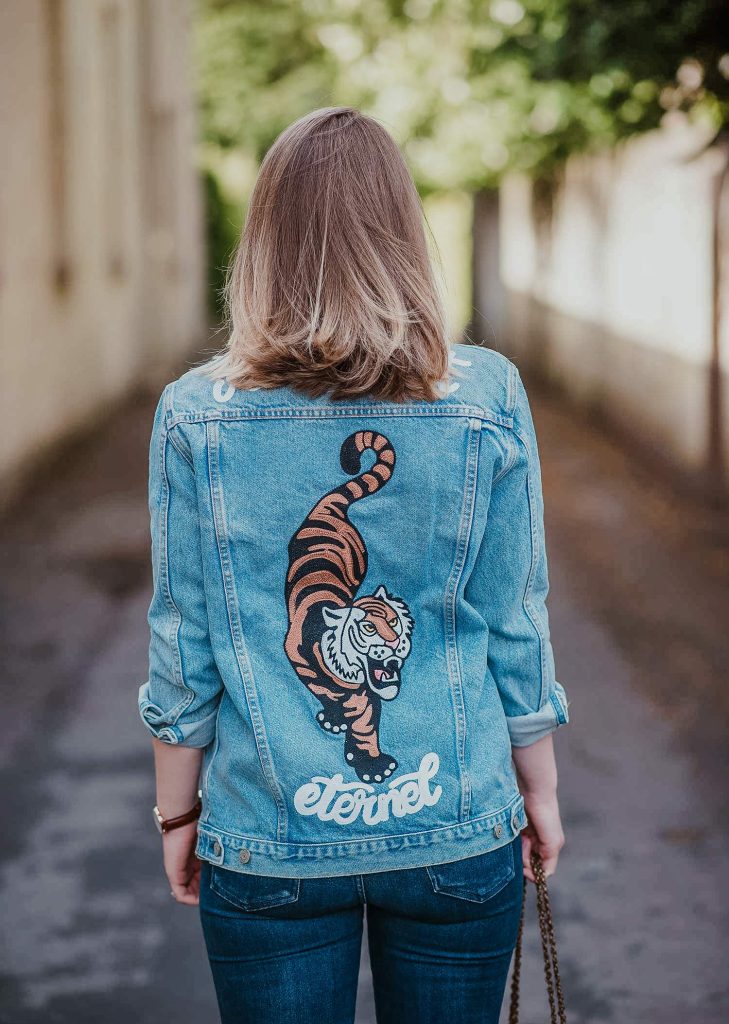
A medium-wash embroidered denim jacket over dark indigo jeans reads intentional. Same-wash denim on top and bottom looks like you grabbed whatever was nearby. The principle: enough tonal contrast between the two pieces that they look chosen, not accidentally matched. Levi’s embroidered denim jackets in the $80–$120 range are where most people land for this combination, and they work cleanly with dark selvedge or black jeans.
Why wide-leg trousers outperform slim fits here
Wide-leg trousers get overlooked as an option, but they’re often the strongest call with a cropped embroidered jacket. The volume at the bottom half visually offsets the detailed, textural upper — both elements balance the silhouette rather than competing for the same visual space. Cream wide-leg linen trousers under a floral embroidered cotton jacket reads considered and easy. It’s a pairing that looks like more effort than it takes.
Which Shoes Work Best With Embroidered Jackets
White sneakers solve almost every embroidered jacket shoe problem. They’re neutral, they don’t compete with the embroidery, and they anchor the look without shifting its register. Clean, minimal silhouettes work best — nothing with heavy branding, loud colorways, or design details on the upper. The jacket is already carrying the visual interest. The shoe’s job is to stay out of the way.
For evening or a slightly elevated occasion, block-heeled ankle boots in tan or black move the look up appropriately without pushing it into territory the jacket can’t support. Pointed-toe flats add a similar level of polish with slightly less height. Both work because they’re simple enough to recede.
When heels actually make sense
An embroidered jacket over a simple midi skirt with low block heels reads polished and put-together. The heel elevates without demanding a formality level that most embroidered jackets can’t match. Stilettos, though, tend to overshoot unless the jacket itself is in velvet or a structured refined fabric. Match the shoe’s formality to the jacket’s material, not just the event you’re attending.
What to avoid on your feet
Shoes with heavy decoration, prominent logos, or loud color blocking. Anything where the footwear is also trying to be a statement. You’re building one focal point. The shoes exist to ground the outfit. When the shoes start competing for attention, you have two focal points and no clear one — and the whole look loses its logic.
How Embroidery Style Changes What You Can Wear It To
Most styling advice treats all embroidered jackets the same. They aren’t. The style of stitching changes the jacket’s register, the occasions it works for, and what it pairs with — sometimes dramatically.
- Floral embroidery (Free People, Anthropologie) — feminine and boho in register. Pairs with linen, flowing fabrics, and flat sandals. Works for brunch, casual Friday, outdoor events. Avoid pairing with anything structured or corporate-facing.
- Folk art or geometric embroidery — bold, multicolored, often drawing from Eastern European, Mexican, or Central Asian visual traditions. These jackets are already a full statement. Everything else in the outfit must be completely plain. Best for markets, festivals, creative events.
- Sukajan or souvenir jacket embroidery — silk or satin backing, Japanese or varsity-adjacent motifs. Needles makes the definitive premium version ($420+); H&M offers accessible interpretations ($59). Streetwear register. Slim black pants, clean white sneakers, minimal everything.
- Varsity patch or letter embroidery — casual, retro, American. Levi’s carries several versions in the $80–$120 range. Goes with straight-leg jeans, white sneakers, a plain baseball cap at most. No mixing with more formal pieces.
- Delicate tonal embroidery — same-color thread, texture rather than color contrast. The most versatile type. Mango’s embroidered blazers ($119) in this style move from office-casual to dinner without reconfiguring the outfit. The embroidery reads as texture, not decoration, so it sits in more contexts.
The occasion rule that actually matters: a heavy folk-art jacket at a formal dinner isn’t bold. It reads as a mismatch — like the outfit and the event don’t know each other. The same jacket at an outdoor festival is exactly right. Let the embroidery style tell you where to wear it. It almost always already knows.
When to leave the embroidered jacket at home
Formal business presentations. Black-tie or near-black-tie events. Any situation where the clothing needs to recede completely and the person needs to come forward. Embroidered jackets pull visual attention — that’s their function. When that function doesn’t fit the situation, the jacket doesn’t go that day. Forcing it reads as someone who didn’t read the room, not someone who’s dressing boldly.
Why sourcing is worth thinking about
Folk art embroidery from specific traditions — Otomi, Oaxacan, Hungarian, Chinese — carries real cultural and craft history. Pieces made by artisans from those traditions tend to have noticeably better stitching, more irregular and interesting pattern work, and support actual craft workers rather than factories reproducing the aesthetic at scale. This doesn’t change how you style the piece, but it changes what you’re wearing and what it represents. Worth knowing before you buy.
How to Accessorize an Embroidered Jacket Without Overdoing It
Two final tips, both pointing in the same direction: less than you think.
Should I add a necklace?
Only if the neckline is actually visible and uncluttered. If the jacket is worn open over a shirt with its own collar situation, adding a necklace creates a crowded zone at the neck — too many competing elements in the same few inches. If you’re wearing a simple scoop-neck tee and leaving the jacket open enough to actually see the neckline, a single delicate chain can work. Not a statement piece. Not something that echoes the embroidery’s colors or motifs — that tips immediately into costume territory.
What kind of bag works?
Solid-colored bags only. A structured black leather tote, a simple canvas crossbody in tan or camel, a minimal leather clutch. No embroidered bags, no patchwork, no printed canvas. The jacket is already doing the textural and visual work for the whole outfit. The bag exists to be functional and quiet.
This sounds more restrictive than it actually is. It means almost every classic solid-color bag you already own will work here — the boring ones you thought you’d outgrow turn out to be exactly right.
Earrings, hats, and the one-statement rule
Earrings are often the smarter choice over a necklace when wearing an embroidered jacket. Small hoops or simple studs sit far enough from the jacket’s main embroidery area — usually the collar, yoke, or shoulders — to avoid visual competition. Large statement earrings end up fighting that exact zone. Keep them small.
Hats: a plain, undecorated option — a solid wide-brim felt hat, a clean baseball cap in one color, a simple ribbed beanie — works with certain jacket styles. Hats with patches, their own embroidery, or prominent logos are out. One embroidered element per outfit.
The pattern behind both of these tips is the same: most people add accessories when wearing an embroidered jacket because the jacket feels like a lot, and instinct says to balance it with more. That instinct is wrong. The jacket is already doing more than most complete outfits manage. When you’re not sure whether to add something — don’t add it. The outfit is already there. The best version of this look is almost always the one where you put something back before you leave.