

Two brands dominate the accessible fashion watch conversation: Fossil, which has been around since 1984 and sells through department stores worldwide, and MVMT, a DTC brand founded in 2013 that raised $300,000 on Indiegogo before selling to Movado Group in 2018 for $100 million. Both target the same buyer — someone who wants a clean, stylish watch without spending $500+.
The question worth asking isn’t “which looks better.” It’s whether either brand actually delivers value worth the price — or whether the money is better spent elsewhere.
How to Actually Evaluate a Watch at the $100–$200 Price Tier
Most watch buying guides skip what matters most: what’s inside the case. Before comparing any two brands at this price point, understand what you’re actually paying for — because that’s where corners get cut first.
Movement Type Determines Longevity
Fashion watches in the $75–$200 range almost universally use Japanese quartz movements — typically Miyota or similar calibers. These are reliable, accurate to roughly ±15 seconds per month, and straightforward to service or replace if they fail. Neither Fossil nor MVMT uses Swiss ETA movements, which cost significantly more and appear in watches starting around $500.
Quartz isn’t bad. A Miyota 2115 movement powers a huge portion of fashion watches sold in North America. But knowing this reframes the comparison: at this price point, you’re paying for case design, strap quality, and brand identity — not horological engineering.
Case Material and Crystal Type
Two specs to check before buying anything in this tier: case material and crystal type. At $100–$200, you’re mostly choosing between stainless steel cases (better) and zinc alloy cases (cheaper, lighter, corrodes faster). For crystal — the transparent cover over the dial — mineral crystal is the standard, scratches easily, and is found on most fashion watches at this price. Hardlex (Seiko’s proprietary variant) offers better scratch resistance. Sapphire crystal is rare below $300.
Strap quality is often overlooked. Genuine leather straps on sub-$150 watches are typically low-grade bonded leather. They crack within 12–18 months of daily wear. Stainless mesh or quality silicone straps hold up significantly better and are worth seeking out specifically.
Fossil vs. MVMT: Direct Comparison
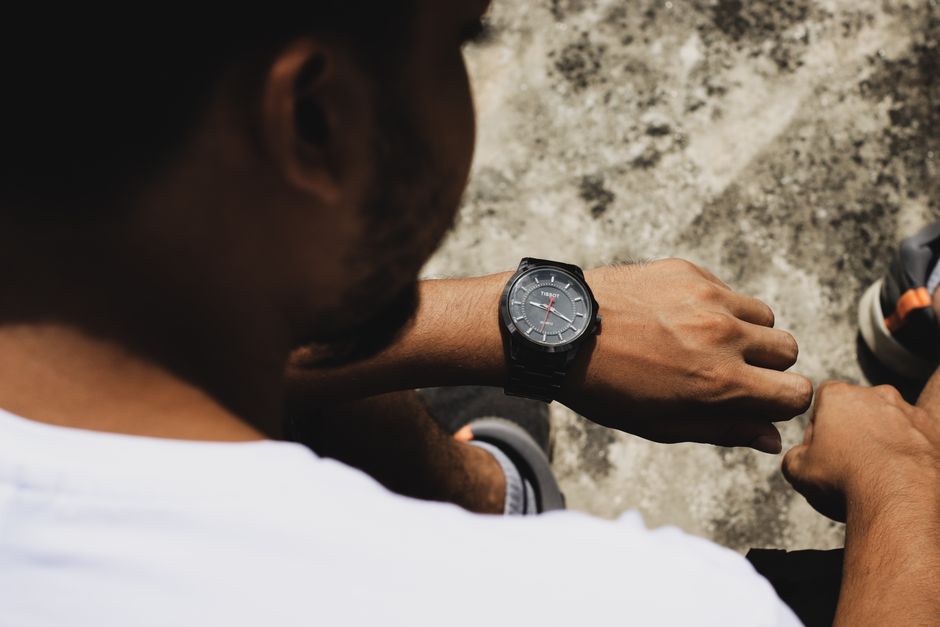
Both brands are more similar than their marketing suggests. Here’s what the specs actually show:
| Feature | Fossil | MVMT |
|---|---|---|
| Price range | $75–$250 (avg. ~$119) | $95–$175 (avg. ~$138) |
| Movement | Japanese quartz (Miyota) | Japanese quartz (Miyota) |
| Case material | Stainless steel (most models) | Stainless steel (most models) |
| Crystal | Mineral crystal | Mineral crystal |
| Water resistance | 3–5 ATM standard | 3–5 ATM standard |
| Warranty | 11 years (limited) | 2 years |
| Retail channels | Department stores + online | Primarily DTC online |
| Style variety | Wide — retro, sport, minimalist, smart | Narrower — mostly minimalist and slim |
Bottom Line: The components are functionally identical. The real differentiators are warranty length (a massive gap), style variety, and aesthetic identity — not build quality or movement precision.
Fossil’s Strengths and Where It Falls Short
Fossil is the better default buy for most people — not because it’s dramatically higher quality, but because it offers more options, better warranty coverage, and accessible in-person service through retail partners.
The Fossil Neutra Chronograph ($119) is a well-proportioned watch. Clean dial, 42mm case, 22mm lug width, and versions with a stainless mesh strap that outlasts the leather options considerably. The Fossil Minimalist ($89) does exactly what its name promises: slim case, no clutter, available under $100.
The 11-year limited warranty is the most underrated Fossil advantage. Quartz movements fail occasionally — usually the battery contact corrodes, or a crown mechanism loosens. Having manufacturer support for over a decade on a sub-$150 watch is genuinely unusual at this price point. MVMT’s 2-year warranty is more candid about expected lifespan, which isn’t necessarily reassuring.
Where Fossil disappoints: finishing quality varies significantly by product line. Some Fossil watches feel substantial; others feel plasticky despite the stainless steel spec. The leather straps on entry-level models crack within 18 months of regular wear. With 200+ SKUs in their catalog, there’s a lot of noise to navigate before finding the good ones.
MVMT’s Value Proposition — Real or Marketing?

Is MVMT actually affordable?
MVMT built its brand on a DTC pitch: cut the middleman, sell quality watches at $95–$150 instead of $300+. That argument landed in 2013–2016 when the model was genuinely novel. In 2026, it’s weaker. The Seiko 5 Sports line offers automatic (self-winding) movements at $150–$200. The Timex Marlin Automatic runs about $179. The Orient Bambino series starts around $100–$130. All three deliver mechanical movements with significantly more longevity than quartz at comparable or lower price points. MVMT is mid-range priced with mid-range specs — the “cutting out the middleman” math doesn’t hold up the way it once did.
Does MVMT quality hold up over time?
MVMT watches look good when new. The MVMT Boulevard ($138) and MVMT Chrono ($148) both have a cohesive minimalist identity that works with a lot of wardrobe aesthetics. The problem is timeline. Mineral crystal scratches visibly within months of daily wear. User feedback points to crown mechanism issues at the 18–24 month mark on some models. The 2-year warranty reflects realistic expectations about what these watches are: stylish fashion accessories with a 2–3 year practical lifespan before they start looking noticeably worn.
That’s not a disaster — it matches the price tier honestly. But MVMT’s marketing implies a premium quality the components don’t support. Know what you’re buying before you commit.
When to Skip Both Brands Entirely
If long-term durability is your actual priority, neither Fossil nor MVMT is the right choice. At $150–$200, the Seiko SRPD55 (~$200) or Seiko SNK809 ($65–$80) offers an automatic movement with no battery required and decades of proven durability. Fashion watch money buys a fashion watch lifespan — and that’s fine, as long as you’re not surprised by it.
Note: This is not financial advice — but buying a $140 watch on a high-interest credit card is a particularly bad tradeoff for an accessory with a 2–3 year practical lifespan.
Which Brand to Buy, Based on Your Actual Situation

- Gift budget around $100, first nice watch: Fossil Minimalist ($89). More size options, easier in-store returns, and the 11-year warranty provides backup if something goes wrong.
- Minimalist aesthetic, slim profile: MVMT Boulevard ($138). The design language is sharper and more visually consistent than Fossil’s equivalent minimalist lines.
- Business casual or office wear: Fossil Neutra Chronograph ($119). The chronograph subdials add complexity that reads as purposeful in a professional context.
- Buying for someone else: Fossil. The warranty advantage matters when you can’t control how another person wears and stores the watch.
- Already own a Fossil, want something different: MVMT for variety. The brand skews younger and more photography-forward with a tighter aesthetic identity.
- Durability is the actual priority: Neither. Seiko 5 Sports or the Timex Marlin will outlast both brands at similar or lower price points.
Fossil and MVMT occupy the same objective quality tier — Japanese quartz movements, mineral crystal, 3–5 ATM water resistance, stainless steel cases. The decision between them is almost entirely about aesthetics and warranty confidence. Fossil is broader and more versatile, with significantly better warranty coverage; MVMT is more focused, with a sharper minimalist identity. If both appeal visually, Fossil’s 11-year warranty is the tiebreaker. If only MVMT’s look works for your wardrobe, the quality gap is small enough to still be a reasonable purchase — just go in knowing the practical lifespan, and you won’t be disappointed.