
Scarves, belts and bags do more than fill empty space. They control color, shape and scale, which makes a basic outfit look deliberate instead of unfinished.
Use the steps below to pick one useful accessory at a time, avoid visual clutter and build combinations you can repeat.
Start with the outfit’s missing function
The best accessory solves a visible problem. A plain outfit may need color. A loose shirt may need shape. A simple jeans-and-sweater combination may need texture or a stronger focal point. Start by looking at the clothes you already have, then name the missing function before shopping. This keeps you from buying attractive pieces that never leave the drawer.
Add color when the outfit looks flat
Use a scarf when your clothes sit in one neutral family, such as black trousers, a gray knit and black shoes. Pick one accent shade already hidden in your wardrobe. Rust works with camel and denim. Cobalt works with navy, white and charcoal. Tie the scarf close to the face if you want the color to brighten your complexion, or place it on a bag handle when you want a quieter effect.
Add shape when the outfit has no waist
A belt gives the eye a horizontal stopping point. Wear it at the natural waist over a dress, at the waistband of high-rise trousers or loosely through belt loops on relaxed denim. A narrow belt keeps a tailored outfit neat. A wider belt makes a simple dress feel more structured, but it can overwhelm a short torso if the buckle sits too high.
Add scale when every piece is the same size
A compact shoulder bag beside wide-leg trousers can look intentional because the proportions contrast. A large tote beside a slim column dress creates a different balance. The verdict is simple: choose the accessory that corrects the outfit’s weakest visual area, not the accessory with the loudest logo.
How to choose a scarf that earns its space
Buy a scarf for a specific job: warmth, color, polish or texture. Shape matters as much as fabric. A long narrow scarf makes a clean vertical line, while a square scarf creates folds around the neck, hair or bag handle. Before buying, measure the coats and jackets you plan to wear it with. A thick scarf under a close collar feels bulky, while a slim silk scarf disappears under heavy outerwear.
| Accessory | Listed price | Material or size detail | Best use |
|---|---|---|---|
| COS geometric-print mulberry silk scarf | $49 | Mulberry silk | Color near the face or a polished bag tie |
| COS pure cashmere triangle scarf | $99 | Pure cashmere | Warmth with a soft triangular drape |
| UNIQLO Italian Oiled Leather Belt | $29.90 | Genuine leather; M, L and XL | Clean waist definition with trousers or denim |
| Longchamp Le Pliage Original M Tote | $165 | Recycled canvas | Light daily carry with a simple outfit |
Pick silk for polish and cashmere for warmth
The COS geometric-print mulberry silk scarf is the stronger choice for office shirts, knit dresses and evening layers because its slim material adds color without adding bulk. The COS pure cashmere triangle scarf makes more sense for cold commutes and coats. Its $99 listed price buys softness and warmth, but it is the wrong choice for a hot indoor office or a small neckline.
Use the two-point color rule
Repeat at least one scarf color somewhere else, such as shoes, a watch strap, a knit or lipstick. Do not match every shade exactly. A navy scarf with navy trousers can look flat; a navy scarf with cream trousers and burgundy shoes has more contrast. For the most reliable result, fold the scarf into a narrow band, place it close to the face and keep the rest of the outfit quiet.
The fastest belt decision: match the line, not the buckle
The best belt is usually the one that repeats an existing line in the outfit. Match a black belt to black shoes when you want a sharp, uninterrupted column. Use a brown or tan belt with warm leather shoes and a relaxed denim outfit. The UNIQLO Italian Oiled Leather Belt, listed at $29.90, is the clear budget pick for daily trousers because it uses genuine leather, comes in M, L and XL, and has a simple buckle that does not compete with a patterned shirt.
Choose the correct width
Use a belt around 1 inch wide for tailored trousers, suit trousers and smaller belt loops. Try a wider belt around 1.25 to 1.5 inches with jeans, utility trousers or a loose dress. Check the loop size before buying. A thick belt forced through narrow loops puckers the waistband, while a very thin belt can look lost on heavy denim.
Choose the correct length
Measure the place where the belt will sit, not your body at its smallest point. The center hole should land comfortably after the buckle passes through the first belt loop, leaving a short tail rather than a long coil. Skip a belt if the trousers already fit securely and the outfit needs vertical length; adding a visible horizontal line can shorten the body. For a specific verdict, use the UNIQLO belt for everyday trousers, but choose a woven belt when you want softness with linen or relaxed summer clothes.
When should you skip an accessory?
Adding another item is not always the fix. If an outfit already has a strong print, a sculptural jacket or large statement earrings, restraint often looks more polished than a full accessory set.
Should you wear a scarf with a high neckline?
Skip a thick scarf over a close turtleneck unless you need serious warmth. The fabric gathers under the chin and hides the neckline, making the upper body look crowded. Use a slim silk scarf tied at the side, or move the scarf to the handle of your bag.
Should you wear a belt with a loose dress?
Use a belt only when the dress has enough fabric and a clear waist position. Skip it when the material pulls, bunches or rises as you walk. A belt cannot rescue a dress with the wrong cut. A cropped jacket, a visible shoe or a change in hem length may create better shape without pinching the middle.
Should you buy a statement bag?
Skip a statement bag if you cannot name three outfits for it. Loud color, unusual hardware and oversized logos limit repeat wear. Buy one only when your wardrobe is mostly simple and the bag will supply the main point of interest. Otherwise, spend the money on a quiet shape you can carry several times a week.
Build three reliable accessory formulas
My strongest recommendation is to build formulas before buying more pieces. A formula removes the morning guesswork and gives each scarf, belt or bag a clear role. Start with the clothes you wear most, not an imagined lifestyle.
Formula one: neutral base plus one color
Wear a white shirt, straight jeans and loafers, then add one colored scarf. Keep the belt and bag in the same dark family so the scarf stays in charge. Fold the scarf into a narrow strip for a crisp look, or knot it loosely for a softer weekend outfit. This formula works best when the scarf color repeats in a small detail such as a shoe, ring or nail color.
Formula two: long line plus waist point
Use a column dress, long cardigan or matching knit set with a belt at the natural waist. Keep the bag compact and close to the body so the waist remains visible. Choose a belt with a small buckle for workwear and a wider plain belt for a casual dress. This is the best formula when the outfit feels shapeless rather than boring.
Formula three: simple clothes plus one strong bag
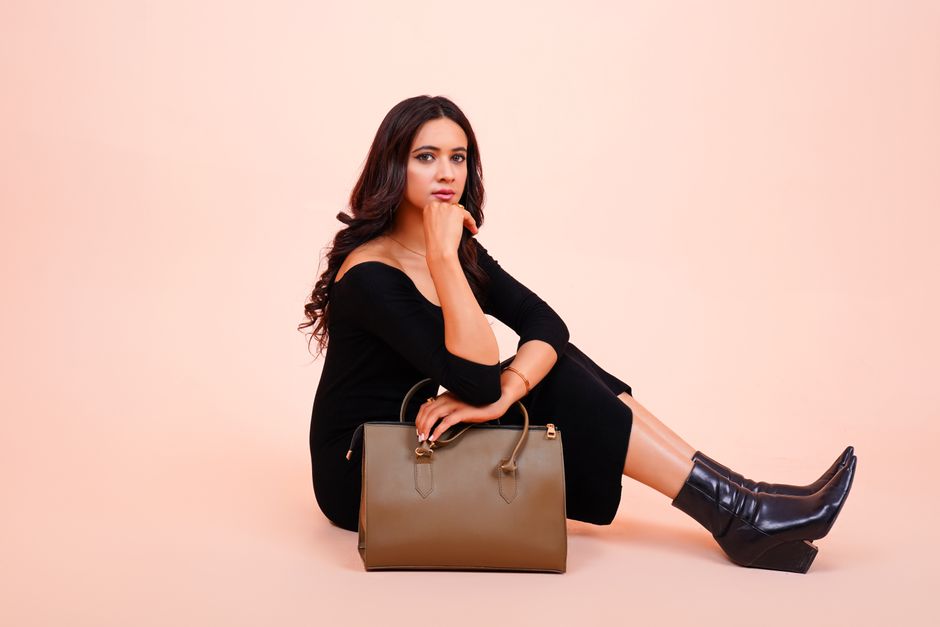
Start with a cream knit, black trousers and simple shoes. Add one bag in burgundy, olive, cobalt or textured tan. Leave the neck and waist clear. The bag becomes the focal point, so avoid adding a printed scarf and a large belt at the same time. This formula gives the most style impact with the fewest purchases.
Fix the five mistakes that make accessories look random
Random-looking accessories usually come from a mismatch in scale, finish or purpose. Fix the relationship between the pieces before replacing everything.
Do not match every material
Leather shoes, a leather belt and a leather bag can work, but three identical finishes may look stiff. Mix smooth leather with canvas, suede or woven texture. Keep the colors related while letting the surfaces differ.
Do not ignore the outfit’s visual center
If the shirt has a large collar, keep the scarf narrow. If the trousers have pleats or cargo pockets, choose a simple belt. If the coat has oversized buttons, pick a quieter bag. Accessories should support the strongest existing detail, not compete with it.
Do not buy for one photograph
Check the accessory in motion. Walk, sit, reach for a phone and put on the coat you actually wear. A scarf that slips, a belt that twists or a bag that cuts into the shoulder will not become useful because it looked good on a hanger.
The most important takeaway is to choose one accessory that fixes the outfit’s biggest problem, then let every other piece stay quiet.