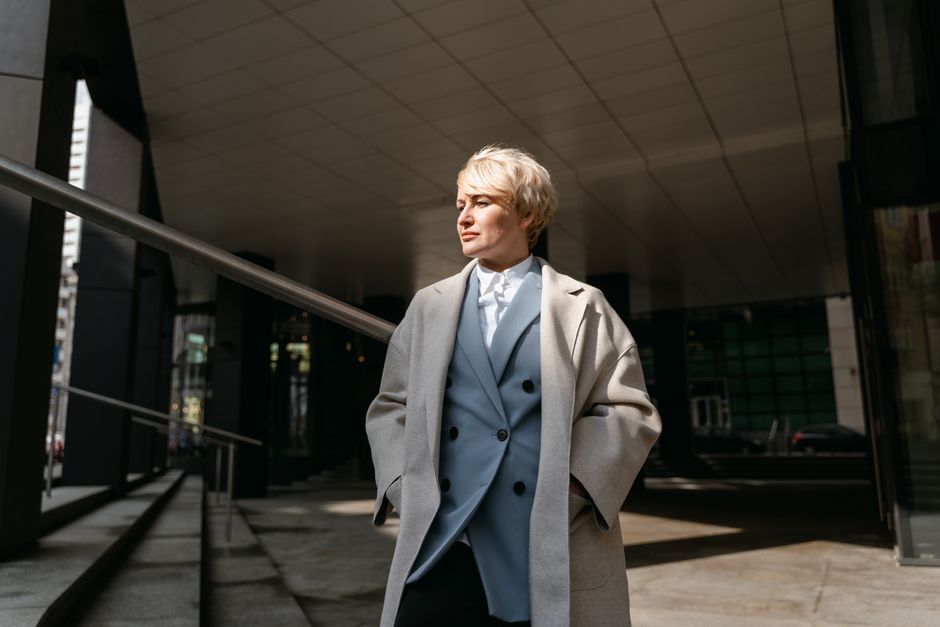

October is the awkward month when summer clothes feel thin but winter coats feel ridiculous. After years of walking through wet autumns, I judge transitional jackets by two things first: how much warmth they add and how much of my outfit they keep dry.
What jacket weight works for a rainy October?
A rainy October jacket should block water and wind without acting like a padded winter coat. For most mild climates, I look for an unlined or lightly lined shell that weighs roughly 250 to 450 grams. That range gives enough structure to handle gusts, but it still leaves room for a sweater underneath. Heavier fabric is not automatically warmer, and a thick jacket that traps sweat becomes miserable after ten minutes on a train or bus.
Why 250 to 450 grams is the useful range
Weight matters because October weather changes during the day. A 250-gram shell feels easy at lunchtime and packs into a tote when the clouds clear. A 400-gram jacket gives better wind resistance and hangs neatly over denim or knitwear. Once a rain jacket pushes far beyond 500 grams without insulation, I start asking what problem it solves. It may feel durable, but it can also become stiff, bulky, and too warm for a season that still reaches 15 to 18 degrees Celsius in the afternoon.
How to test layering room before buying
Try the jacket over the thickest layer you will actually wear, not over a thin T-shirt in a warm shop. Zip it fully, cross your arms, sit down, and raise both arms as if you are reaching for a train handle. You need about 5 to 8 centimetres of ease across the chest and enough sleeve length to cover the wrist when your arms move forward. If the shoulders pull, size up or choose a roomier cut. If the body balloons around a light top, the jacket will feel sloppy on mild days. My preferred transitional fit is relaxed through the torso, shaped slightly at the hem, and never tight at the armpits.
How long should a rain jacket be for October?
For everyday city wear, the most useful hem lands between the upper thigh and mid-thigh. That length covers the waistband and part of the seat without catching on a bicycle saddle or making a short skirt disappear. I use the table below as a starting point, then adjust for shoes, commute, and how much sitting I do.
The useful length bands
| Jacket length | Best use | Rain coverage | Main drawback |
|---|---|---|---|
| 50–60 cm back length | Walking, cycling, short skirts | Protects chest and waist | Leaves the seat exposed |
| 65–78 cm back length | Daily commuting and jeans | Covers hips and upper thighs | Can ride up when seated |
| 80–95 cm back length | Long walks and heavy showers | Protects most of the upper leg | Warmer and less easy to move in |
| Below 95 cm | Persistent rain or dress wear | Strongest outfit coverage | Needs a two-way zip or side vents |
My rule for the hem
I choose a 68 to 78 centimetre back length for a normal October commute. It covers the place where rain usually runs off a jacket and lands on trousers, while still working with ankle boots and trainers. A shorter jacket only wins when I cycle, carry a backpack, or wear wide-leg trousers that need movement. A longer coat earns its place during slow walks in steady rain, but I want vents, a two-way zip, or generous side snaps. Without those details, extra length turns every step into a tug-of-war.
How to layer a transitional jacket without overheating
The trick is to treat the jacket as the weather shell, not as the entire outfit. October comfort comes from choosing the layer underneath with care, then leaving enough space for air to move.
The three-layer October setup
- Start with a breathable base such as a cotton jersey, merino T-shirt, or thin long-sleeve top. Avoid a bulky thermal layer unless the morning temperature is below 8 degrees Celsius.
- Add one insulating middle layer. A merino cardigan, cotton sweatshirt, or 100-gram quilted vest gives more control than buying one heavy jacket for every forecast.
- Use the shell for rain and wind. Check that the hood sits close to the head, the cuffs close around the wrist, and the hem does not gap when you sit down.
- Carry a small scarf instead of adding a thick lining. A scarf warms the neck when the wind picks up and can disappear into a bag when the afternoon turns mild.
- Keep the lower half practical. Water-resistant trousers or a quick-drying denim blend matter more than adding another heavy layer on top.
Mistakes that make October jackets uncomfortable
The most common mistake is wearing a warm sweater under a narrow fashion jacket. The fabric compresses at the shoulders, the sleeves twist, and the wearer blames the jacket instead of the fit. Another mistake is choosing a very light shell with no hood adjustment; rain then runs directly onto the collar. I also avoid jackets with smooth metal zips and no storm flap if I expect wind-driven rain. A shell does not need to look technical, but its closures must do real work.
Which transitional jacket works for a wet city commute?
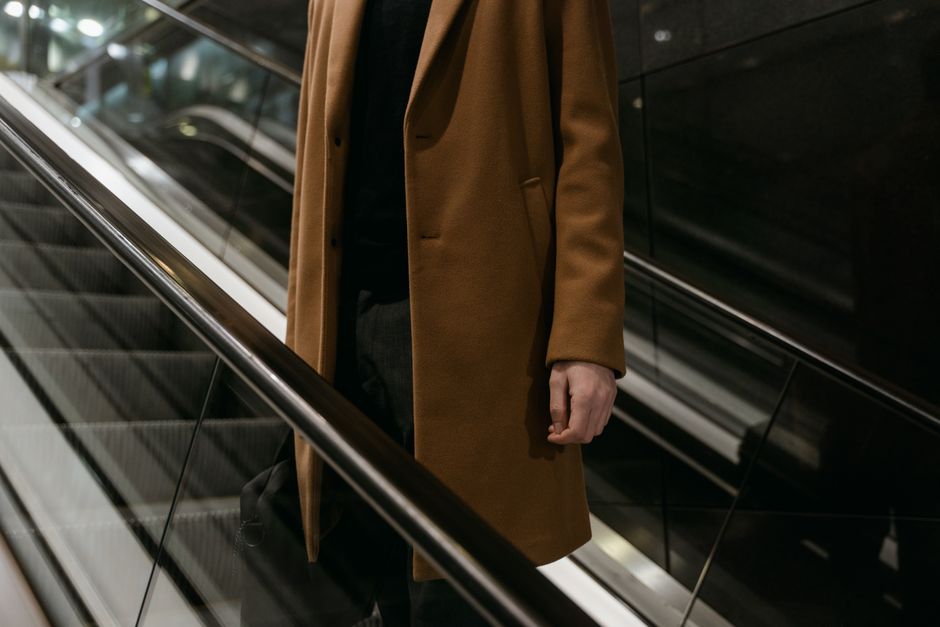
For warm, wet commutes
My pick is the Rains Long Jacket at about €99.90 because its long cut, welded seams, hood, and lightweight PU fabric solve the basic October problem cleanly; it is listed as waterproof with a W3 rating, but I would not mistake that light construction for a warm coat, so I wear it over a thin knit and choose the mid-thigh hem when showers matter more than breathability.
For changing temperatures and longer walks
The Patagonia Torrentshell 3L is my stronger all-round choice at $179: the women’s version weighs 352 grams, has a three-layer construction, and leaves enough room for a sweater without feeling like a winter parka.
For style-led country walks, the Barbour Beadnell Waxed Jacket is the clear winner, but it is a different tool at $415 and 74 centimetres in back length; its 6-ounce waxed cotton feels substantial, looks better with boots and corduroy, and needs sponge cleaning rather than machine washing, so I buy it for character and durability, not for light packability.
When should you skip a transitional rain jacket?
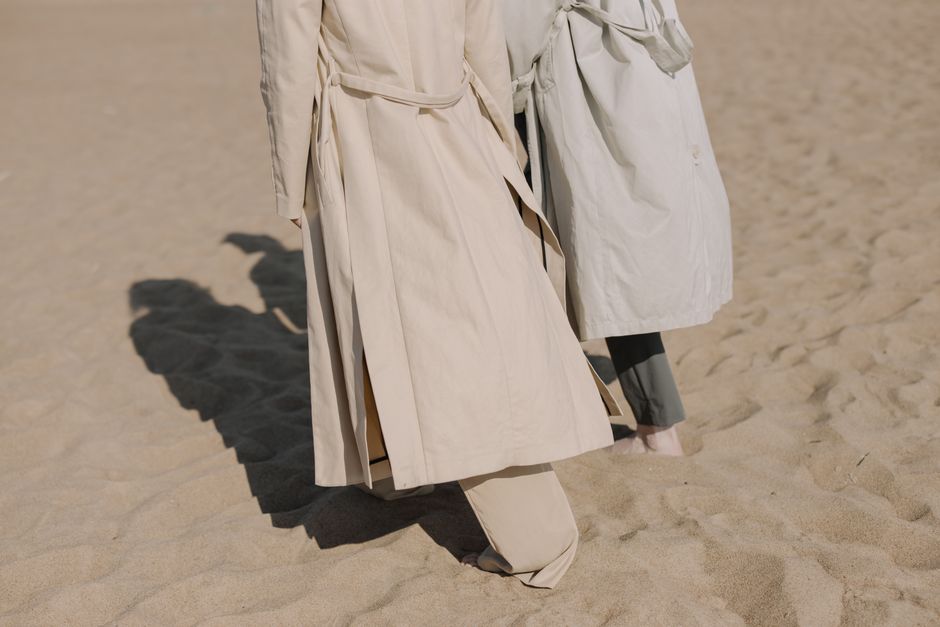
Do not buy a transitional jacket if you really need a winter coat, a cycling shell, or a breathable hiking layer. A stylish October jacket cannot fix the wrong category. I would rather own a simple shell plus a separate warm layer than force one fashionable piece to handle every condition.
Skip the short fashion jacket when rain is the main problem
- Do not choose a cropped 50-centimetre jacket for long walks unless you already own waterproof trousers or accept a wet seat and waistband.
- Do not buy an unlined cotton jacket for repeated downpours. Waxed cotton resists rain well, but it feels heavier and needs care; it is not the same as a breathable technical shell.
- Do not size down for a sharper silhouette. A jacket that cannot close over a sweater will spend October hanging in the wardrobe.
- Do not trust the word water-resistant by itself. Check the hood, seams, cuffs, and front closure. Water often enters through construction details before it soaks through the main fabric.
Choose another category when the forecast demands it
For cycling, choose a shorter back, dropped hem, reflective details, and sleeves that stay clear of the handlebars. For cold rain below 8 degrees Celsius, choose an insulated coat or add a proper mid-layer under the shell. For long hikes, the Patagonia Torrentshell makes more sense than the Barbour Beadnell because lower weight and three-layer construction matter more than heritage styling. For short urban errands in steady rain, the Rains Long Jacket wins on coverage and price. My final test is simple: if the jacket covers the hips, fits over one real sweater, closes against wind, and still feels comfortable after twenty minutes indoors, it is built for October rather than merely coloured like it.