

A 45-inch dress can land near the ankle on someone who is 5 ft 2 in and sit at mid-calf on someone who is 5 ft 8 in. That is why body type matters less than proportion when you choose a summer midi dress. The right dress balances hem length, waist position, neckline, fabric weight, and shoe height.
What Makes a Midi Dress Flattering?
Verdict: the most flattering midi dress creates a clear visual break at the waist and ends at a narrow part of the lower leg. Do not judge the dress on the hanger. Judge it on your body, with the shoes you plan to wear. A dress that looks elegant in a product photo can make you look shorter if the hem cuts across the widest part of your calf.
Use the hem-to-waist relationship
| Dress detail | Best starting point | Why it works |
|---|---|---|
| Hem length | 2 to 4 inches below the knee or just above the ankle | Avoids the widest part of the calf |
| Waist seam | At your natural waist or 1 inch above it | Raises the visual leg line |
| Skirt shape | Soft A-line for most figures | Moves over the hips without clinging |
| Shoulder width | Straps or sleeves that end near the shoulder edge | Keeps the upper body balanced |
| Side slit | One slit ending above the knee | Adds movement without shortening the dress |
Check movement, not just standing posture
Walk, sit, and lift one knee before deciding. The waist should stay in place, the bust should not pull across the buttons, and the skirt should fall back into shape after you move. A midi dress that needs constant tugging is the wrong cut, even if the mirror view looks good. For the strongest starting point, choose a defined waist, a lightly flared skirt, and a hem that exposes the slimmest section of your calf.
How to Measure Before You Shop for a Midi Dress

Verdict: measure your own body and a dress that already fits before trusting a size label. Small differences between brands can change the result more than a change in body shape.
- Stand barefoot on a firm floor with your feet together. Keep the tape level rather than pulling it tight.
- Measure your full bust at the fullest point, your natural waist at the narrowest point, and your full hip around the widest point.
- Measure from the top of your shoulder, over the fullest part of your bust, to the point where you want the hem to finish.
- Compare those numbers with the garment chart. Use the largest measurement when the fabric has no stretch.
- Measure a dress you own from the shoulder seam to the hem. This gives you a useful finished-length reference.
Choose length by the finished measurement
A petite shopper often needs a 42 to 45 inch finished length for a true mid-calf midi, while a taller shopper may need 47 to 52 inches. These are starting points, not rules. Torso length changes the result: a long torso may need a longer shoulder-to-waist measurement, while a short torso often looks better in a raised waist seam.
Allow room for sitting
For woven cotton or linen, leave about 1 to 2 inches of ease at the bust and hips. A fitted waist can sit closer, but it should not dig in when you sit. Stretch jersey can use less ease, yet too much cling reveals every fold and makes the dress twist. The best purchase decision comes from matching the garment measurements to your moving body, not from choosing the number you usually wear.
Which Midi Dress Silhouette Works for Your Proportions?
My pick: a softly shaped A-line midi with a waist seam wins for the widest range of body proportions. It gives the waist a visible point, leaves room through the hips, and creates a clean line from waist to hem. A wrap dress comes second because it adjusts well, but thin wrap ties can shift during a windy summer day.
A-line for fuller hips or a smaller waist
Choose a skirt that widens gradually from the waist rather than exploding into a full circle. This shape follows the body without marking the hip line. The COS Linen-Blend Midi Dress is a useful design reference if you like a square neckline and a straighter, cleaner A-line; look for wide straps, a stable waistband, and a skirt that does not balloon at the side seams.
Column and bias cuts for a straighter frame
A column dress creates length on a straighter body, especially when the fabric falls close to the body and the waist is suggested with a seam or belt. The Reformation Tagliatelle Dress is a recognizable bias-cut example: its diagonal grain creates movement, but it needs enough hip ease to avoid pulling. Choose it when you want a sleek result; skip it if you dislike fabric tracing the stomach or hip area.
For a fuller bust, a fit-and-flare cut with a V or square neckline is more reliable than a high crew neck. For a short torso, avoid a wide contrasting belt because it takes up the small space between bust and hip. The clear winner for most everyday wardrobes remains a single-color A-line with a waist placed at the narrowest point.
Which Neckline and Strap Shape Balances Your Upper Body?

Verdict: neckline shape controls the first impression of a midi dress more than sleeve decoration. Pick the line that balances your shoulder and bust width, then keep the rest of the dress simple.
Does a V-neck suit a fuller bust?
Yes, when the V ends above the cleavage rather than plunging to the waist. A moderate V creates open space and reduces the block of fabric across the chest. Look for a sewn-in bust panel, a secure underbust seam, or a hidden snap. A loose wrap without a snap can gape, so it needs a camisole or a small alteration before it becomes practical.
Are square necklines good for narrow shoulders?
A square neckline can make narrow shoulders look broader because its horizontal edge adds structure. Pair it with medium-width straps that sit near the shoulder bone. Spaghetti straps set far inward make the upper body look smaller and can leave a large expanse of skin between the strap and arm.
What should broad shoulders avoid?
Skip stiff puff sleeves and wide cap sleeves if they stop at the widest part of the shoulder. A clean V-neck, a halter line, or a narrow scoop creates a more vertical path. The best balance comes from one strong neckline and a calm skirt, not from adding volume at both the shoulder and hip.
How Do Fabric and Color Change the Fit?
Verdict: fabric weight decides how a midi dress behaves, while color decides how strongly the eye reads its outline. Start with fabric, then choose color.
- Linen and linen blends: feel cool and hold an airy shape, but they crease at the waist and hip. A linen blend with rayon drapes more softly than pure linen.
- Cotton poplin: creates structure and works well for A-line skirts. It can add visible volume if the skirt has heavy gathers.
- Jersey: follows the body and packs easily. Choose a medium weight around 180 to 220 gsm when you want less cling.
- Satin or bias-cut viscose: reflects light and skims the body. It needs a lining or slip if the fabric turns transparent in sunlight.
- Eyelet and openwork cotton: adds texture, but check the lining length and coverage before wearing it outdoors.
Use contrast with a purpose
A dark skirt with a lighter bodice draws attention upward; a dark bodice with a lighter skirt emphasizes the lower half. Vertical stripes lengthen the eye path, while large horizontal bands can shorten the torso. The Uniqlo Linen Blend Camisole Dress, commonly made in a linen-rayon blend with adjustable straps, shows why a single-color fabric can look longer than a dress with a high-contrast waist panel.
Know when texture becomes volume
Ruffles, tiers, smocking, and large pockets change the outline. A tier beginning at the high hip adds width there; a pocket placed at the side seam can pull open and signal that the garment is too small. For a polished summer midi, choose one focal texture and keep the remaining surfaces quiet.
When Is a Summer Midi Dress the Wrong Buy?
Skip it when the hem fights your height
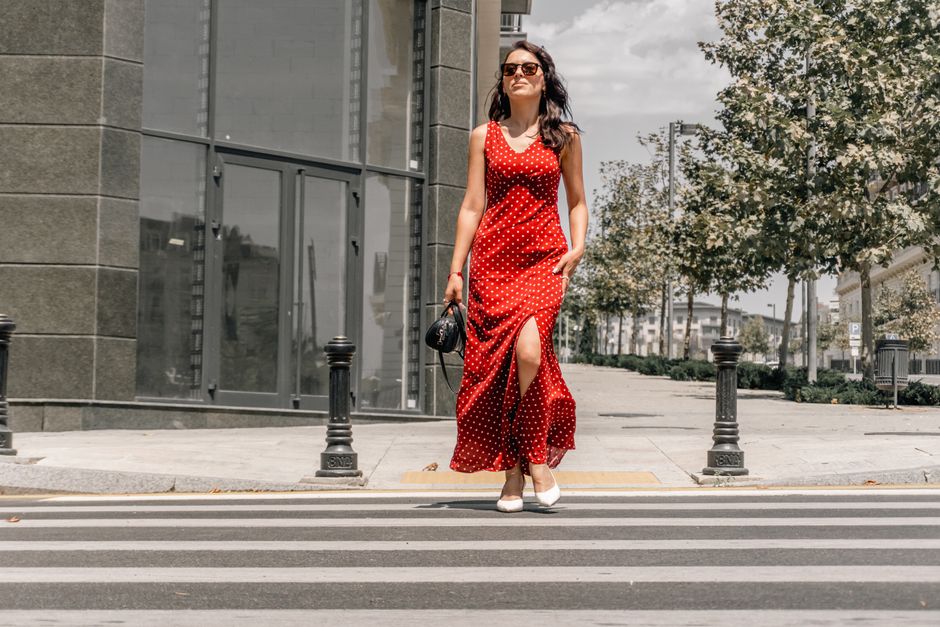
Do not buy a midi dress simply because the label says midi. If the hem ends at the broadest part of your calf, it can make the leg look wider and the body look shorter. A tailor can shorten many dresses, but shortening a tiered skirt, border print, or dress with a side slit may ruin its proportions. If the hem sits in the wrong place and the dress has no simple alteration point, leave it in the fitting room.
Skip it when the fabric needs constant management
A dress is a poor summer choice if the bodice gaps, the lining climbs, the straps fall, or the skirt twists every time you walk. These are fit failures, not styling problems. Do not plan to solve a tight hip with shapewear or a loose bust with repeated pinning. Buy a different size, a different cut, or a different fabric. The right midi dress should let you walk, sit, reach, and eat without monitoring it every few minutes.
Also skip a pale unlined dress for bright outdoor events unless you have checked it in direct light. The most expensive mistake is not choosing the wrong body-shape category; it is buying a dress that only works while standing still under soft indoor lighting.
How to Make the Final Midi Dress Decision in Five Minutes
Verdict: use a short fitting-room test and choose the dress that passes every movement check. A flattering shape that fails comfort will not become a wardrobe favorite.
- Put on the shoes you will wear most often. A flat sandal and a 2.5 inch heel can change the useful hemline by several inches.
- Check the side view. The waist should sit at the natural waist or slightly above, and the skirt should fall away from the fullest hip without pulling.
- Raise both arms, sit in a chair, and take ten normal steps. Watch for strap movement, bust gaping, hem restriction, and lining drag.
- Look at the hem in daylight. Keep it above the widest calf area or close to the ankle bone.
- Take one phone photo from the front and side. A photo reveals a tilted waist seam and a collapsing neckline faster than a mirror.
Use specific dress references, not vague inspiration
Compare the details you like with real designs. Boden Linen Blend Midi Dress styles often show how a shaped waist and practical pockets can work together. COS Linen-Blend Midi Dress designs offer a cleaner, architectural line. Uniqlo Linen Blend Camisole Dress styles show the value of adjustable straps and lighter construction. Reformation Tagliatelle Dress styles demonstrate the movement of a bias cut. These references help you name the feature you need instead of chasing a body-type label.
Make one clear choice
For most summer wardrobes, buy the A-line midi with a defined waist, medium-weight fabric, adjustable straps, and a hem just above the widest calf point. Choose a wrap cut when your waist-to-hip ratio changes between brands. Choose a column or bias cut when you want a sleek line and accept closer fit through the hips. The best dress is the one whose proportions still work after you sit down.