
The assumption that virtual meetings are easier to dress for than in-person ones is wrong. They’re actually harder. A regular outfit has context — the full room, your posture, your movement. A camera crops all of that out and gives viewers a 16:9 rectangle of your upper body, flattened by compression, slightly color-shifted by JPEG artifacts, lit by whatever happens to be near your face. What looks sharp in a mirror often looks cheap or chaotic on screen. What reads as understated in person — a cream silk charmeuse, a brushed cotton button-down — often photographs better than you’d expect.
This is about understanding what the camera actually rewards, then matching specific blouses to that reality.
What a Camera Actually Does to Your Clothes
Most video compression algorithms (Zoom, Teams, and Google Meet all use H.264 or H.265) handle solid colors better than complex patterns. The codec samples blocks of pixels and tries to encode them efficiently. Fine patterns — herringbone, small florals, thin stripes — create high-frequency data that the encoder struggles with. The result is shimmer, moiré, or that unsettling vibration you sometimes see on TV news anchors wearing tight-check jackets.
Beyond compression, there’s the lighting problem. Cameras auto-expose to the brightest point in the frame. If you’re wearing pure white or bright optical-white, the camera often blows it out — losing all texture detail and making you look like you’re wearing a glowing rectangle. Off-white, ivory, and cream avoid this while still reading as light and fresh.
Texture is the third factor. On camera, texture reads as dimension and quality. A slightly textured fabric — raw silk, crepe, linen — photographs as richer than it costs. A perfectly smooth polyester satin looks plasticky and cheap because the flat surface catches light in a way that reveals every imperfection and screams synthetic.
The last thing: color saturation. Most laptop webcams and even decent external cameras oversaturate slightly. Muted tones — dusty rose, slate blue, camel, sage — stay in their lane and look intentional. Neon or very saturated colors can clip on screen and look cartoonish. This isn’t a style preference. It’s how the hardware behaves.
The 6 Blouses — Side-by-Side Comparison
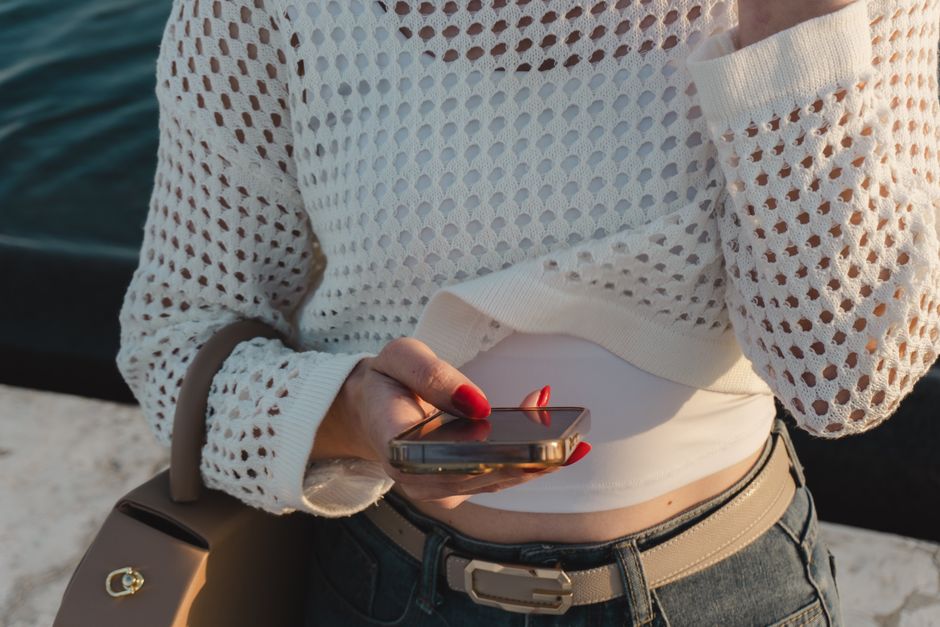
Six blouses that consistently perform well on camera, across different webcam quality levels, lighting setups, and skin tones.
| Blouse | Price | Best For | Camera Performance | Verdict |
|---|---|---|---|---|
| Quince 100% Washable Silk Blouse | $50 | Budget, daily use | Excellent — matte silk finish avoids glare | Best value pick |
| Everlane The LUXE Poplin Blouse | $88 | Crisp, structured looks | Very good — slight texture reads well, solid colors only | Best for corporate calls |
| & Other Stories Tie-Neck Silk Blouse | $72 | Adding visual interest near neckline | Good — bow frames the face without competing with it | Best neckline detail |
| Equipment Slim Signature Blouse | $210 | Investment piece, versatile colorways | Excellent — washed silk drapes without sheen | Best overall if budget allows |
| COS Draped Jersey Top | $85 | Comfort during long all-day calls | Good in solid colors, avoid any pattern version | Best for marathon meetings |
| Banana Republic Satin-Finish Crepe Blouse | $90 | Finance, legal, formal contexts | Very good — crepe texture adds depth without shimmer | Best for formal calls |
The Quince washable silk wins on value — it’s $50, it photographs like a $200 blouse, and you can machine wash it on cold. The Equipment Slim Signature is the objectively better piece, but at $210 it only makes sense if you’re on calls five days a week and want something that lasts years without fading or pilling. For most people, Quince closes that gap to near-zero for practical purposes.
The Banana Republic crepe deserves more attention than it gets. Crepe photographs exceptionally well because its woven texture creates micro-shadows that add depth on screen. It’s structured without being stiff, and the satin finish is subtle enough to avoid the blow-out problem of true satin. At $90, it sits in a useful middle range.
Neckline Frames Your Face — This Is Not Aesthetic Advice
Camera framing typically cuts you off around mid-chest. That means your neckline sits very close to your face in the viewer’s field of vision. It’s doing active work as a visual frame — whether you design it to or not. This is a function, not a preference.
V-necks create a strong downward line that elongates the neck and draws the eye toward the face. Generally flattering on camera. Crew necks work well if they’re not too high, but they reduce visible neck space and can read as casual depending on the fabric. Boat necks are underrated for video calls: wide, elegant, and very photograph-friendly. They photograph particularly well in washed silk or crepe.
Necklines That Often Backfire
High mock necks compress the visual frame around the face and look severe under bad or overhead lighting. Very low V-necks create issues with professional perception, especially on calls with mixed or client-facing audiences. Off-shoulder tops are the most common mistake: the absence of a sleeve edge against the neck makes the camera crop feel incomplete, and the shoulder area reads as bare even when the fabric quality is good.
The Tie-Neck Exception
The & Other Stories tie-neck silk at $72 is one case where a neckline detail genuinely improves camera performance. The bow sits right where the camera crops the frame and creates visual interest without the chaos of a print. It photographs cleanly, adds personality, and removes the need for jewelry to break up a plain top. If you’ve ever looked at your video call thumbnail and felt like something was missing from the neckline area — this is the fix.
Fabric Ranked by How It Actually Looks on Screen
Straight ranking, no hedging:
- Washed or matte silk — Best on camera. Texture without sheen. Drapes without wrinkling mid-call. Both Quince and Equipment use this finishing approach.
- Cotton poplin or oxford cloth — Very reliable. Clean, structured, photographs sharp. Main risk is wrinkling if you’ve been sitting for an hour.
- Crepe — High performer. The slight texture adds visible depth without any shimmer issues. Banana Republic’s crepe blouses are consistently good examples.
- Jersey knit — Comfortable, works well in solid colors. Avoid fine-knit patterns or ribbing, which create moiré at typical video call resolutions.
- Satin — Situational. High sheen can blow out under ring lights or near bright windows. Use with caution and only in controlled lighting environments.
- Chiffon — Poor camera fabric. The slight transparency and fabric movement looks fine in person, but on video it creates flicker and reads as insubstantial.
- Sheer lace or heavily embroidered fabric — Avoid for calls. High visual complexity is the enemy of video compression and of clear camera focus.
The Pattern Rule
Solid colors outperform prints on video, every time. If you love prints, large-scale florals or low-contrast abstract prints are the only patterns that don’t create problems. Fine stripes, herringbone, houndstooth, and anything with repeating geometric detail will shimmer or vibrate on screen. When in doubt, go solid — the fabric’s texture and drape do the visual work that patterns would, and they do it without fighting the codec.
Color on Camera: Three Questions Worth Answering

Does white actually work on video calls?
Optical white — the kind that fluoresces under UV — overexposes badly on camera, especially with a ring light or near a bright window. Ivory, warm white, and off-white behave much better. The Quince washable silk in ivory is a meaningfully better choice than the same blouse in true white for exactly this reason. The difference is visible even on a mediocre laptop webcam.
What colors are universally safe across different cameras?
Navy, dusty rose, sage green, camel, and slate blue consistently translate well across skin tones and camera quality levels. These colors don’t oversaturate on typical webcams and they contrast enough with most home and office backgrounds to keep you visually distinct from the environment behind you. The COS Draped Jersey Top in slate blue is a reliable example of this done simply.
Should your blouse color match or contrast with your background?
Contrast, always. Tonal matching to your background makes you visually disappear on low-quality cameras — particularly the built-in webcams that most meeting attendees are viewing you through. If your wall is white or light gray, navy or sage creates clear separation. If your background is dark wood or a bookshelf, lighter tones keep you well-defined on screen. A technically good blouse worn against a matching background will still look muddy.
Styling the Top Half When the Bottom Half Is Irrelevant
One real advantage to video calls: only your top half matters. A $50 Quince silk blouse does the same job as a $500 full outfit when the frame cuts at mid-chest. You can wear whatever comfortable bottoms you own. That’s not a small thing.
The consequence, though, is that your blouse has to carry more visual weight than it would in person. A plain crew-neck tee photographs as casual even in silk. A blouse with a subtle structural detail — a placket, a collar, a bow — reads as intentional and complete. This is why the Everlane LUXE Poplin’s button placket matters on camera even though it’s a small detail. When the frame cuts at mid-chest, the upper portion of the blouse is all anyone sees.
Give the top something to do. A pendant necklace, a single brooch, or a blouse with a collar detail accomplishes this without requiring a full outfit rethink. The & Other Stories tie-neck handles it built-in. The Equipment Slim Signature handles it through pure fabric quality — the way washed silk drapes and catches light does the work on its own.
That 16:9 crop is actually an opportunity. You’re dressing for a rectangle, not a room. Once you understand what the camera rewards — matte textures, solid muted colors, necklines that frame rather than compete — the question of what to wear to a video call stops being hard. You’re solving a simpler problem than it first appeared.