
The interview outfit question has gotten more complicated since 2026. Remote work shifted company cultures, hybrid offices blurred dress codes, and what reads as polished in a fintech startup is aggressively wrong for a law firm. Getting this right requires knowing your industry first, your body second.
How Dress Codes Actually Break Down by Industry
Before you open your closet, you need to know which category your target company falls into. Showing up in a full suit to a product design studio signals you didn’t research the culture. Showing up in business casual to a financial services firm signals you didn’t take the interview seriously. Here’s where the lines actually sit in 2026:
| Industry | Expected Level | Safe Outfit | What to Avoid |
|---|---|---|---|
| Law / Finance / Banking | Business Formal | Tailored suit in navy, charcoal, or black; closed-toe block heels | Anything sleeveless, bright colors, open-toe shoes |
| Corporate Tech (Google, Microsoft scale) | Smart Business Casual | Blazer + tailored trousers or midi skirt, clean leather flats | Full suit reads stiff; avoid denim entirely |
| Startup / Creative Tech | Elevated Casual | Well-cut dark trousers + unmatched blazer + leather loafers | Corporate-looking prints, matching suit sets |
| Healthcare / Education | Business Casual | Slacks or midi skirt, tucked blouse, structured cardigan or blazer | Anything revealing, very high heels |
| Fashion / Media / Creative | Polished Personal Style | One intentional statement piece; everything else clean and simple | Safe-to-the-point-of-forgettable neutrals |
| Government / Nonprofit | Business Casual to Formal | Conservative blazer, neutral palette, low block heels | Trendy items, visible logos on clothing |
When in doubt, go one level above what employees typically wear. You can always remove a blazer. You cannot add formality you didn’t bring.
The One-Level-Up Rule
Look at the company’s LinkedIn photos, their Instagram if they have one, or headshots from the team page. Dress one notch above that. If their staff wears smart casual, you wear business casual. This rule holds across industries and prevents both failure modes: overdressing and underdressing.
When You Truly Can’t Tell
If there’s no visual reference — the company is private, their social presence is sparse — default to business casual with a blazer you can remove. Tailored dark trousers, a clean blouse, and a structured blazer works in 90% of interview scenarios. It reads as prepared, not overdressed.
The Four Pieces That Carry Every Interview Outfit
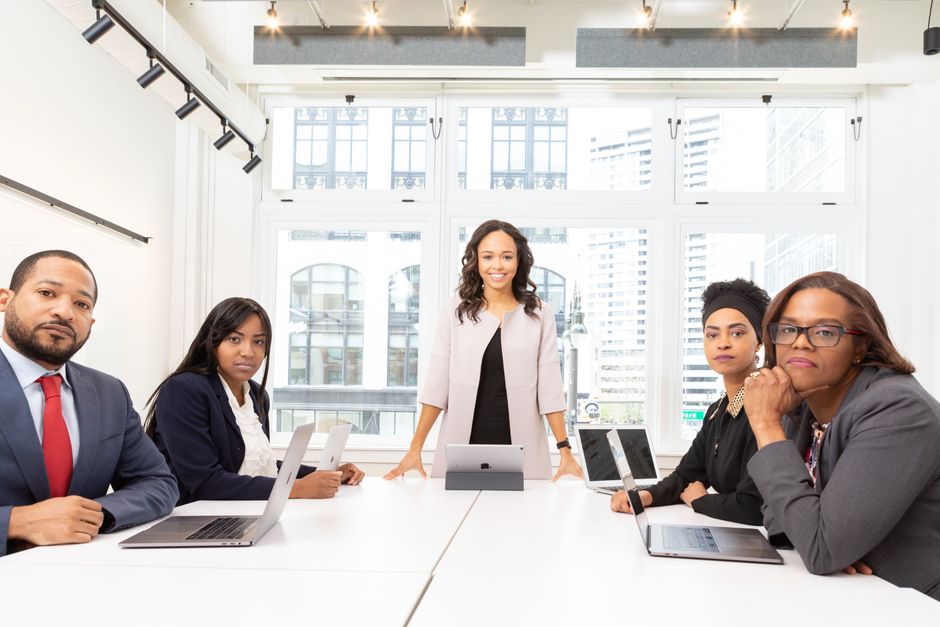
Every interview outfit is built from four decisions: blazer, bottom, top, shoes. Get these four right and everything else is noise.
The Blazer
This is the piece that signals seriousness more than anything else. The Quince 100% Italian Wool Blazer ($150) is my current recommendation for anyone who doesn’t want to spend Theory money. It presses cleanly, holds its shape through a full day, and looks considerably more expensive than it costs. For a genuine step up, the Theory Treeca Blazer ($395) is the benchmark — the shoulder construction is noticeably different and the fit through the waist is more precise out of the box.
One fit rule that matters more than any brand: the shoulder seam must sit exactly at your shoulder bone. Not a centimeter over. A blazer that creeps past the shoulder looks like a hand-me-down regardless of price or label.
The Bottom
Two options work cleanly: tailored trousers or a midi skirt hitting between the knee and mid-calf. The M.M. LaFleur Delancey Pant ($148) is the most-recommended interview trouser across career communities, and it earns it — genuine structure, a slight stretch for comfort during long sit-down interviews, and a proper straight-leg silhouette that works with both blazers and standalone blouses. The Banana Republic Avery Straight Pant (~$110) is a solid budget alternative with similar proportions.
Avoid pencil skirts for most interviews. They restrict movement, require constant adjustment when sitting down, and read as dated in any industry outside of formal finance. A midi skirt with a slight A-line is easier to move in and looks considerably more current in 2026.
The Top
Silk or silk-adjacent woven blouses, tucked in. Solid colors or very subtle patterns. The J.Crew Ruffled-Placket Top ($78) has been reliable — the placket detail adds visual interest without becoming distracting. Avoid anything with a complicated neckline, thin spaghetti straps under a blazer, or fabric that wrinkles on contact. You will be sitting for 30 to 60 minutes. Woven fabrics hold their shape; jersey does not.
The Shoes
Block-heeled pumps or leather loafers. The Cole Haan Grand Ambition Pump ($130) is worth the price because you can walk in it for eight hours without the interview day becoming about your feet. For flats, the Sam Edelman Loraine loafer ($80) looks intentional rather than casual and photographs well on video calls. Pointed-toe kitten heels are back and fully appropriate for interviews. Sky-high stilettos are not wrong in principle — they’re just impractical when you’re navigating an unfamiliar office building before the conversation even starts.
Fit Decides More Than Any Brand
A $600 Theory suit that doesn’t fit will lose to a $100 Ann Taylor suit that does. Every time. If you’re buying new pieces for a specific interview cycle, factor in one round of tailoring — taking in a blazer waist runs $25 to $40 and is the single highest-return alteration available.
Six Things That Undercut a Strong First Impression
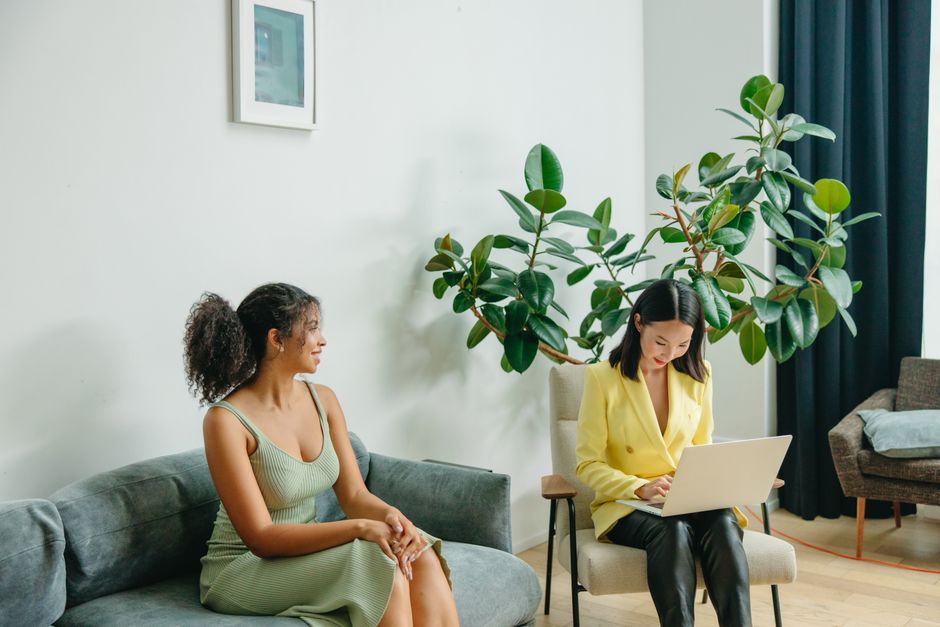
You can nail the outfit and still walk in looking wrong. These are the specific errors that interviewers notice even when they can’t name what’s off.
- Fragrance. Wear none, or the smallest possible amount — one spray at the wrist, not the neck. Many offices are fragrance-sensitive, and a strong scent can dominate the entire conversation in ways that have nothing to do with the job.
- Visible wrinkles. Iron or steam everything the morning of the interview. Not the night before. Fabric wrinkles sitting in a bag.
- Shoes that are clearly uncomfortable. The way you walk in pain is visible. If you cannot move normally in a shoe, don’t wear it to an interview.
- Too many statement pieces simultaneously. One is a choice. Two is competition. Pick one: interesting earrings, OR an interesting bag, OR distinctive shoes. Not all three.
- Visible brand logos on clothing. A quiet label on a bag is fine. A large logo on a blazer or blouse reads as either too casual or trying too hard, depending on the brand.
- Clothes that don’t fit in the shoulders. This is the first thing people register, even unconsciously. It makes everything else read as sloppy — regardless of how much each piece cost.
What About Color?
Navy, charcoal, black, and camel are the safest interview colors. Burgundy and forest green are acceptable in most industries and look more current than straight black in 2026 without reading as risky. Avoid white trousers (too casual for most interview contexts), beige that closely matches your skin tone (visually odd in person and on camera), and anything neon or very bright unless you’re interviewing for a role where creative self-expression is the point.
Nails and Jewelry
Nails: clean, short, neutral or sheer. A bold red or deep berry can work if the rest of the look is cohesive and controlled. Chipped polish is the only actual mistake here — it reads as rushed. Jewelry: stud earrings or small hoops. One ring per hand for conservative industries. A thin chain necklace is always appropriate and adds finish without competing with anything else.
The Two-Outfit System That Covers Every Scenario
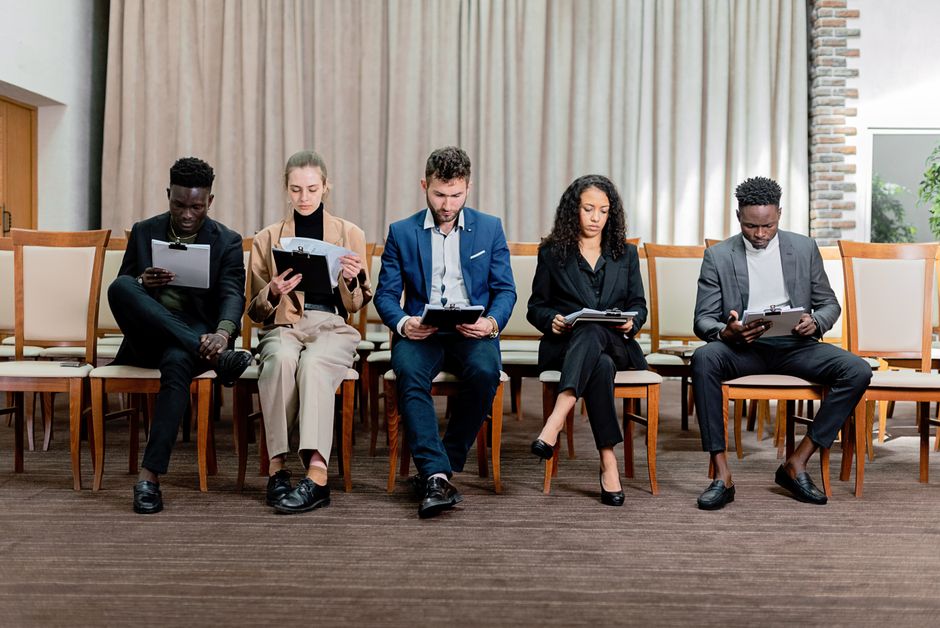
Here’s the honest recommendation: build two complete interview outfits, not one. One formal, one smart casual. Between them, you cover every industry, every round, and every uncertainty without rethinking from scratch before each interview.
Outfit 1 (formal): Matching suit in navy or charcoal — blazer and trousers from the same brand so they read as a deliberate set. A silk blouse underneath. Block-heeled pump. This covers law firms, finance, government, and any company where you have genuine uncertainty about culture. When you go formal for round one, you can always loosen in subsequent rounds.
Outfit 2 (smart casual): Well-cut dark trousers that don’t match the blazer, a complementary unmatched blazer in a different color, a clean woven blouse. Leather loafers. This works for tech companies, media, education, nonprofits, and most mid-size businesses where a full suit would read as stiff.
The Ann Taylor Petite and Extended Size Blazer ($160) works well as the smart casual option — it’s less architectural than a suit blazer and pairs more naturally with non-matching bottoms. For the formal suit, Banana Republic’s Heritage Tailored Suit collection ($200–$280 per piece) hits the right balance of quality and price without requiring a specialist alteration appointment before you can wear it.
For first-round interviews specifically: always default to Outfit 1. It is much easier to dress down in a later round than to recover from underdressing in round one, when the panel is forming their first impression with no prior context about you.