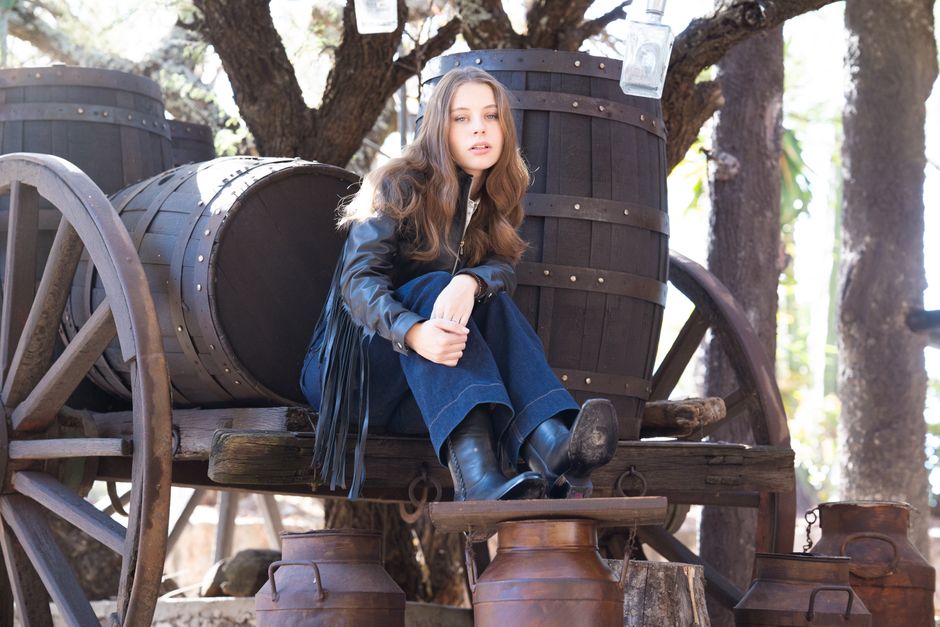

The common mistake is thinking that tailored trousers need a delicate dress shoe in winter. They do not. They need a shoe with enough visual weight to balance wool, enough grip for wet pavement, and a clean enough shape to keep the outfit sharp. A thin-soled loafer looks misplaced in freezing rain, while a bulky hiking boot makes good trousers look like an afterthought.
How to match boot shape to trouser break
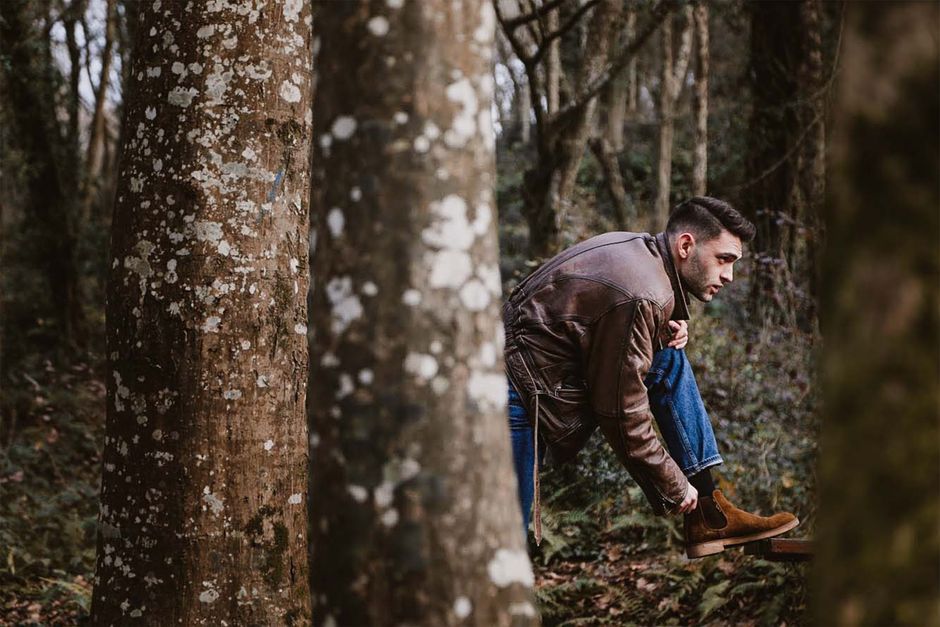
A slight break is the safest winter choice
A slight break gives the hem enough fabric to rest on the boot without forming a messy stack. It works with an ankle boot, a plain-toe boot, or a Chelsea boot. The trouser opening should cover most of the boot shaft when standing, but it should not drag over the heel or fold across the vamp.
For slim trousers, start with an opening around 7 to 7.5 inches. A regular tapered trouser can handle roughly 7.5 to 8 inches. Wider trousers can take an 8-inch opening or more, especially when the shoe has a rounder toe. These measurements are starting points, not laws, but they prevent the most common proportion errors.
Match the toe shape to the cut
Sharp trousers look best with an almond or gently squared toe. Fuller flannel trousers can handle a round plain toe because the extra fabric gives the footwear room. Avoid putting a very pointed boot under a relaxed trouser; the contrast makes the shoe look costume-like.
Keep the hem clean when you sit down. If the trouser rises high enough to show several inches of sock, the inseam is too short for that boot. If the hem catches under the heel, the inseam is too long or the heel is too low. A tailor can usually fix the first problem in one appointment, but no alteration can rescue a boot with the wrong shape.
Which winter boots work best with tailored trousers?
Six useful options, ranked by role
| Boot | Approx. US price | Best use | Main tradeoff |
|---|---|---|---|
| Meermin Balmoral Boot | $250 | Sharp office outfits | Less forgiving in heavy snow |
| Thursday Captain | $199 | Everyday commuting | Casual toe shape |
| Blundstone 585 Classic | $230 | Wet casual tailoring | Elastic sides read less formal |
| Allen Edmonds Higgins Mill | $495 | Rainy business-casual days | High price and heavier profile |
| Red Wing Iron Ranger 8085 | $350 | Rugged wool trousers | Too bulky for slim tailoring |
| Morjas Chelsea Boot | $295 | Minimal city outfits | Limited snow traction |
The best overall choice for a mixed office commute is the Thursday Captain. It has a $199 price, a defined toe, and enough sole to cope with normal winter pavement. For formal tailoring, I would spend more on the Meermin Balmoral Boot because its closed-lacing shape looks cleaner under wool trousers.
The Blundstone 585 wins for wet sidewalks and casual tailoring, but do not pair it with sharply tapered suit trousers. Its pull-on shape needs denim, flannel, or a fuller trouser to look intentional.
My clear pick for wet commutes
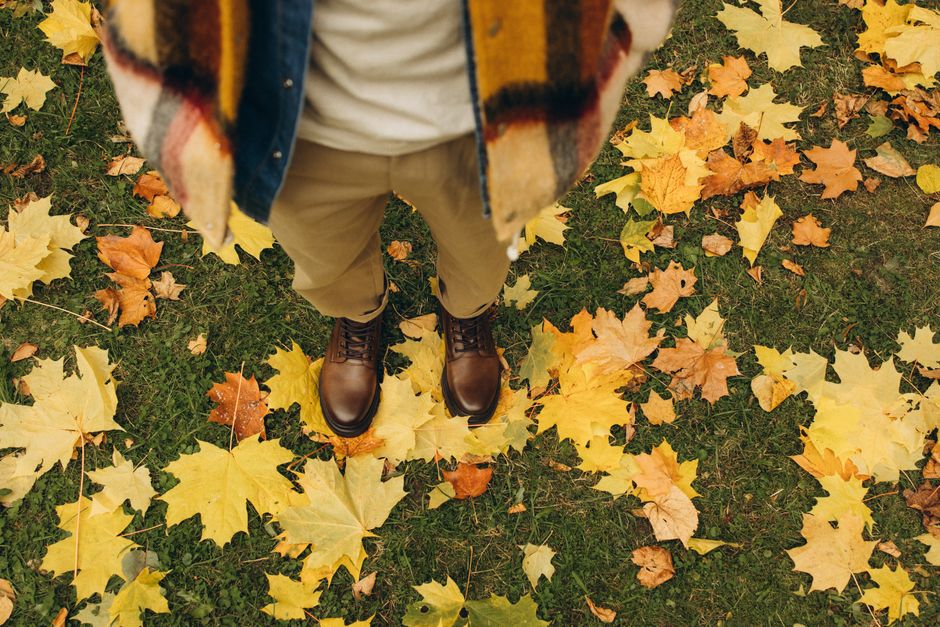
Buy the Allen Edmonds Higgins Mill if rain, slush, and office clothes are your daily problem. At about $495, it costs more than the Thursday Captain, but the weather-ready construction and rubber sole make it the more convincing long-term choice for a commuter who still wants a polished outfit.
Why the Higgins Mill earns the extra money
The Higgins Mill has the right balance of dress and utility. Its cap-toe design gives tailored trousers a clear finishing point, while the lugged rubber outsole offers more confidence on slick pavement than a thin leather sole. The boot is not elegant in the formal-suit sense, but it looks right with charcoal flannel, brown tweed, navy hopsack, and heavier worsted trousers.
It also has enough room for a medium-weight merino sock without forcing the trousers to sit over a swollen ankle. That matters more than people admit. A boot can be technically warm but still fail if your foot feels cramped by lunchtime.
When the cheaper Thursday is the better buy
Choose the Thursday Captain instead if your winter is mostly cold pavement, light rain, and heated offices. The $199 price leaves room for shoe care, and the cleaner profile works with more trousers. Its leather will show wear faster than the Higgins Mill, but that is not a reason to avoid it. It is a reason to condition the upper twice a season and keep the boot away from direct radiator heat.
My verdict: Higgins Mill for serious wet commuting, Thursday Captain for value and versatility. I would not pay extra for a dress boot that offers no meaningful improvement in grip or construction.
Five mistakes that ruin the outfit
Use this buying checklist before ordering
- Do not buy a boot that is wider than the trouser leg. The toe should fill the hem, not push it outward. A bulky toe under a slim leg creates a funnel shape.
- Do not ignore the sole edge. A bright white sneaker-style edge clashes with formal wool. Choose a dark brown, black, or matching rubber edge for a quieter transition.
- Do not size up for thick socks without checking heel slip. Extra length does not create warmth. It creates blisters and makes the boot look loose under the trouser hem.
- Do not wear soaked suede into a heated room. Blot the surface, remove the laces, insert shoe trees, and let the boot dry at room temperature. Fast heat can stiffen and crack the leather.
- Do not wear a dress boot on untreated ice. A sleek leather sole may look excellent, but it cannot replace traction. For icy routes, use a rubber-soled model or add a thin protective sole before winter.
The trouser mistakes are just as common
Many people blame the boot when the real problem is the trouser hem. A skinny opening forces a round boot to look oversized. A long break swallows a Chelsea boot. A cropped hem exposes the entire shaft and makes a business outfit look like a fashion experiment.
Try the full outfit on before making a final decision. Wear the actual trousers, the socks you use in winter, and the belt you normally wear. Stand, walk, and sit. The right pair should still look balanced when the hem rises by an inch.
When a sleek leather boot is the wrong choice

Choose rugged footwear for real snow and long outdoor walks
A clean Balmoral or Chelsea boot is a poor choice when your route includes deep snow, slush, or untreated sidewalks. Its narrow sole can slide, its leather can absorb water through the welt, and its refined shape often leaves little room for a warm sock. That does not make the boot bad. It makes it wrong for the job.
For those conditions, the Red Wing Iron Ranger 8085 is the more honest purchase. At about $350, it has a thick leather upper, a substantial toe, and a profile that works with heavy flannel or wide-leg wool trousers. It does not belong under slim charcoal suit trousers. With olive, brown, or dark grey trousers that have a fuller leg, it looks deliberate.
Know when casual is more polished than pretending
The Blundstone 585 costs around $230 and handles wet weather better than many dress boots because its pull-on construction has fewer exposed seams. It is also easy to remove at the office door. The tradeoff is obvious: the elastic side panels and rounded toe make it casual.
That casual look can still work with tailoring if the rest of the outfit agrees. Use a soft-shoulder jacket, textured trousers, and an open-collar shirt. Do not combine it with a sharply structured navy suit and a silk tie. The boot will look like a practical object invading a formal outfit.
This is the first-principles test I use: does the boot solve the conditions you actually face? If the answer is no, a prettier boot is not a smarter purchase. For light rain and office floors, buy the Morjas Chelsea Boot at roughly $295. For snow and long walks, buy the Red Wing instead and give the trousers enough width to support it.
Questions that settle the final choice
Can black boots work with navy or charcoal trousers?
Yes. Black is the safest color for charcoal trousers and the cleanest choice for formal office wear. It also works with navy when the leather is matte and the rest of the outfit is not overly formal. My pick is the Meermin Balmoral Boot at about $250 because its closed lacing keeps the line neat. Brown is more flexible with olive, tan, and grey, but it looks less formal.
Are Chelsea boots warm enough for winter?
They can be warm enough for a city winter, but the construction matters more than the name. A lined Chelsea with a rubber sole works for rain and cold pavement. An unlined Chelsea with a thin leather sole does not. The Morjas Chelsea Boot is my choice for dry, cold days because its sleek shape sits neatly under tailored trousers, but I would not use it for icy sidewalks.
What is the best one-boot wardrobe?
The Thursday Captain is the best single purchase at around $199. It handles office-casual clothing, dark denim, flannel trousers, and ordinary rain without looking like a hiking boot. Choose the Allen Edmonds Higgins Mill instead if your commute is consistently wet or your trousers are mostly heavy wool. The right boot is the one whose shape, sole, and weather protection match the clothes and ground you actually use.