
Running with your canine companion offers an unparalleled way to bond, explore, and stay fit together. However, relying on the wrong leash setup can quickly transform a joyful outing into a tangled mess, or worse, risk injury for both you and your dog. Finding the best jogging dog leash involves looking beyond basic functionality; it means understanding how specialized designs improve safety, comfort, and control.
Why a Regular Leash Fails for Running
Many dog owners start their running journey using the standard leash they already own. This often leads to frustration and discomfort. A conventional handheld leash, while perfectly adequate for walks, simply isn’t designed for the dynamic, often high-impact activity of running. The issues range from minor annoyances to significant safety concerns.
The Problem with Handheld Grips
When you’re running, your hands need to be free. They should pump naturally, aiding your balance and propulsion. Holding a leash, even a lightweight one, disrupts this natural arm swing. Your grip tightens, your shoulders hunch, and you inadvertently introduce tension throughout your upper body. This leads to inefficient running form, premature fatigue, and even chronic pain in your wrists, elbows, or shoulders. Furthermore, a sudden pull from your dog can easily yank your arm out of position, potentially causing you to lose balance or drop the leash entirely. This isn’t just uncomfortable; it compromises your stability on uneven terrain and in high-traffic areas. The constant micro-adjustments to keep the leash taut or loose distract from your run, making it harder to focus on your pace or surroundings.
Uneven Pressure and Jerking
Traditional leashes offer little to no shock absorption. This means every sudden lunge or change in direction from your dog translates into an immediate, jarring pull. This direct force can be painful for both of you. For your dog, it puts sudden pressure on their neck if they are wearing a collar, risking tracheal damage or strain. For you, it’s a constant, unpredictable tug-of-war. Imagine trying to maintain a steady stride while constantly being thrown off balance. This dynamic leads to an uneven gait, increased risk of tripping, and a generally unpleasant experience for both runner and dog. The lack of elasticity also discourages your dog from moving consistently ahead or beside you, as any slight deviation results in an uncomfortable jolt. Specialized running leashes incorporate features specifically to mitigate these abrupt forces, distributing pressure more evenly and absorbing shocks.
Essential Features of a Safe Running Leash
A leash designed for running integrates several key components that distinguish it from standard walking leashes. These features work in concert to enhance safety, comfort, and control, allowing for a more harmonious running experience.
Understanding Bungee Cord Dynamics
The bungee section, often referred to as a shock absorber, is arguably the most critical feature of a jogging leash. Its purpose is to absorb sudden impacts and distribute tension smoothly. Instead of a sharp, immediate tug when your dog pulls, the bungee stretches, providing a gentle, progressive resistance. This dampens the force, protecting both your joints and your dog’s neck. Look for a bungee that offers a good balance of stretch and recoil – too much stretch can make control difficult, while too little defeats the purpose. The ideal bungee length and elasticity will depend on your dog’s size and pulling strength. For strong pullers, a robust, longer bungee is essential to prevent jarring. For lighter pullers, a shorter, more subtle bungee can suffice. This elasticity also encourages your dog to maintain a consistent pace ahead of you, as they learn that steady pulling is comfortable, while sudden lunges are met with gentle resistance rather than a harsh stop.
Waist Belt Design and Comfort
The waist belt is what truly makes a jogging leash “hands-free.” It transfers the pulling force from your arms to your body’s core, which is much stronger and more stable. A well-designed waist belt should be wide and padded to distribute pressure comfortably across your hips and lower back, preventing digging or chafing. Adjustable straps are crucial for a snug, secure fit that won’t ride up or down during your run. Some belts feature multiple attachment points, allowing you to position the leash centrally or slightly to the side, depending on your dog’s running style and your preference. Pockets for keys, phone, water bottles, or treats are also a practical addition, eliminating the need for a separate running belt. The material should be breathable to prevent sweat buildup, and reflective elements are a bonus for low-light visibility.
Clip and Attachment Security
The hardware on a jogging leash must be robust and reliable. Clips should be made from durable materials like aircraft-grade aluminum or heavy-duty steel, designed to withstand significant pulling forces without bending or breaking. Look for swivel clips that prevent the leash from twisting and tangling, especially if your dog tends to move from side to side. The attachment mechanism to the waist belt is equally important. Some leashes use a fixed loop, while others feature a sliding ring that allows the leash to move freely around your waist. A sliding ring is often preferred as it prevents the belt from twisting if your dog changes direction, reducing the risk of you being pulled off balance. Ensure all seams and attachment points are reinforced with heavy-duty stitching, as these are critical stress points that must not fail mid-run.
Top Leash Systems for Dedicated Runners
Choosing the right hands-free system can significantly impact your running comfort and your dog’s behavior on the trail. While many options exist, these three stand out for their thoughtful design and durability.
| Product Name | Key Features | Ideal For | Approx. Price (2026) |
|---|---|---|---|
| Ruffwear Roamer Leash | Adjustable webbing, Wavelength™ stretch webbing (bungee), Talon Clip™, Padded handle for quick grab. | Versatile runners, dogs of all sizes, moderate pullers, urban & trail running. | $40 – $55 |
| Tuff Mutt Hands-Free Bungee Leash | Strong bungee, adjustable waist belt with D-ring, two handles for control. | Budget-conscious runners, strong pullers, road running, larger dogs. | $25 – $35 |
| Iron Doggy Runner’s Choice Leash | Ultra-lightweight, 360° swivel carabiner, strong zero-shock bungee, reflective stitching. | Serious runners, light to moderate pullers, small to medium dogs, maximum freedom. | $50 – $65 |
The Ruffwear Roamer Leash
Ruffwear is known for its high-quality outdoor gear, and the Roamer Leash lives up to that reputation. Its signature Wavelength™ stretch webbing provides an excellent balance of elasticity and control, making it suitable for a wide range of dogs and running styles. The adjustable length means you can use it waist-worn or hand-held if needed for tighter situations. The integrated padded handle near the clip is a thoughtful addition for quick control when navigating crowded areas or needing to reel your dog in quickly. It uses the secure Talon Clip™ which is easy to operate even with gloves. The Roamer is a solid all-rounder, excellent for both casual joggers and more serious trail runners who need reliability.
The Tuff Mutt Hands-Free Bungee Leash
For those seeking a hands-free leash that doesn’t break the bank but still delivers on performance, the Tuff Mutt is a strong contender. Its bungee system is robust and handles strong pullers effectively, absorbing the shock well. The waist belt is comfortable with a movable D-ring, allowing the leash to slide around your waist without twisting the belt itself. What sets it apart for practical control are the two strategically placed handles: one near the clip for immediate close-up control and another closer to the waist for guiding your dog without breaking your stride. This makes it particularly good for training or managing dogs with unpredictable lunges. It’s a workhorse for everyday jogging.
The Iron Doggy Runner’s Choice Leash
The Iron Doggy Runner’s Choice is designed with serious athletes in mind. It prioritizes lightness and freedom of movement without compromising on strength. The zero-shock bungee is highly effective, and the 360° swivel carabiner ensures that the leash never twists, no matter how much your dog shifts directions. The reflective stitching is a crucial safety feature for early morning or late evening runs. While it’s one of the pricier options, its construction feels incredibly durable and refined. It’s particularly well-suited for smaller to medium-sized dogs and runners who prefer a minimalist, high-performance setup where every ounce matters. If you’re looking for an almost imperceptible connection to your dog while running, this is a top choice.
Choosing the Right Leash Length for Your Dog and Pace

Leash length is more than just a measurement; it dictates the freedom your dog has, the control you maintain, and the overall dynamic of your run. There isn’t a single “best” length; it depends entirely on your dog’s training, your running environment, and your personal preference for proximity.
Short Leashes for Close Control
A shorter leash, typically 4 to 6 feet (or 1.2 to 1.8 meters) when fully extended, is ideal for dogs still learning leash manners, for running in crowded urban areas, or when you need your dog to stay very close to your side. This length provides immediate feedback for corrections and keeps your dog within your peripheral vision, reducing the chance of them veering off into traffic or toward other distractions. For dogs that are new to running alongside a human, starting with a shorter leash can help establish the desired heel or side position. It also offers more leverage if you need to quickly stop your dog or guide them around an obstacle. The trade-off is less freedom for your dog to explore, which might be frustrating for highly scent-driven breeds.
Longer Leashes for Trail Running
For experienced dog-and-runner teams tackling open trails or wide-open spaces, a longer leash – often 8 to 10 feet (2.4 to 3 meters) or even more – can be beneficial. This length allows your dog more room to run slightly ahead, explore scents briefly without yanking you, and navigate varied terrain with greater independence. It’s particularly favored in activities like canicross, where the dog is encouraged to pull ahead. The extra length provides a wider buffer for both of you, making sudden changes in direction less jarring. However, a longer leash demands a dog with excellent recall and consistent leash manners, as the greater distance means less immediate control. It also increases the risk of tangling around trees, rocks, or other runners if not managed carefully. Always ensure your dog is well-trained before opting for a longer leash in less controlled environments.
Hands-Free vs. Semi-Hands-Free: A Verdict
For serious runners, there’s no real competition. A truly hands-free system with a waist belt is the superior choice for comfort, safety, and performance. Removing the leash from your hands allows for natural arm swing and better balance, drastically reducing the risk of injury and improving your running efficiency. Any system that still requires you to hold or periodically grab the leash compromises these benefits, making it a less optimal solution for consistent, high-quality runs.
Training Tips for Leash Manners on the Run
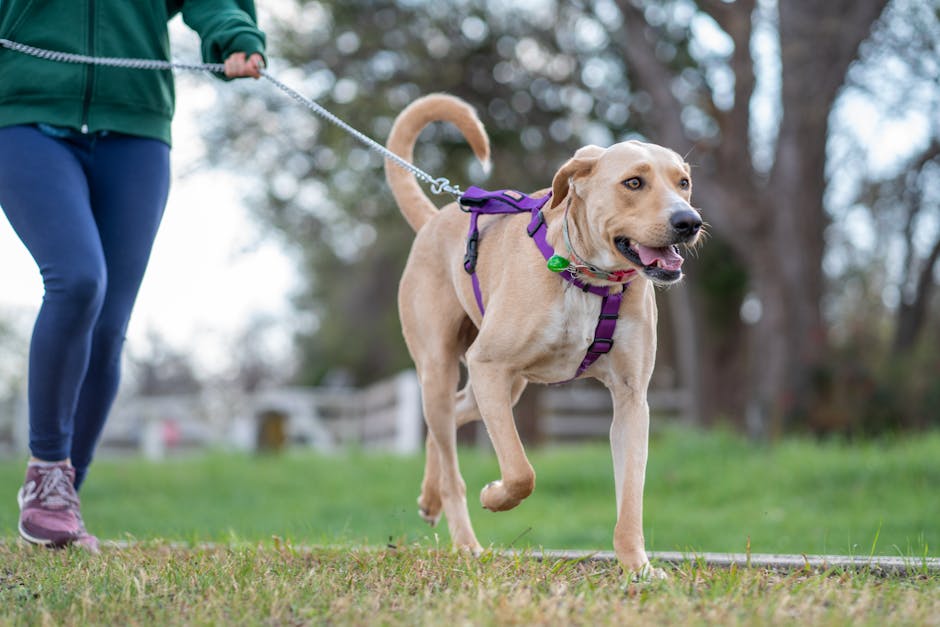
Even the best jogging leash won’t magically make your dog a perfect running partner. Consistent training and clear communication are . Integrating these tips into your routine will build good habits and make your runs more enjoyable.
Starting Slow and Consistent Commands
Don’t expect your dog to immediately understand what’s expected of them on a run. Start with short, slow jogs, even walks, using your new hands-free leash. Use clear, consistent verbal cues like “Let’s Go!” or “Run!” to signal the start of running, and “Easy” or “Stop” when you need them to slow down or halt. Reward calm, steady behavior, especially when they maintain a consistent pace without pulling excessively. Keep initial sessions brief to prevent overstimulation and fatigue. Gradually increase distance and speed as your dog becomes more accustomed to the routine. Consistency is key; always use the same commands and expectations for running versus walking.
Avoiding Distractions
Running environments are full of potential distractions: squirrels, other dogs, cyclists, interesting smells. Before you hit challenging routes, practice in quieter areas. Work on your dog’s focus by having them check in with you periodically. If they start to get distracted, a gentle, consistent pull from the bungee system combined with your verbal cue (e.g., “Leave It!” or “Focus!”) can redirect their attention. Avoid allowing them to greet every dog or person you pass, as this establishes a precedent that can be hard to break later. The goal is for your dog to understand that when the running leash is on, it’s time to work and move with you, not to socialize or explore every bush.
Leash Accessories That Enhance Your Running Experience
While the leash itself is the star, certain accessories can significantly upgrade your dog-running setup, boosting comfort, safety, and control. Investing in these can make a noticeable difference in your overall experience.
The Importance of a Good Harness
This is my firm recommendation: always run your dog on a harness, not just a collar, when using a jogging leash. Collars, especially standard flat collars, put direct pressure on your dog’s trachea and neck when they pull. This is not only uncomfortable but can cause serious injury, especially with repeated strain during running. A well-fitting, Y-front, padded harness distributes pressure evenly across your dog’s chest and shoulders, allowing for unrestricted movement and breathing. Look for harnesses designed for active dogs, often called “running harnesses” or “canicross harnesses,” which prioritize comfort and freedom of shoulder movement. Brands like Ruffwear’s Front Range Harness ($50) or the Hurtta Adventure Harness ($55) are excellent choices, offering durability and ergonomic design. Never compromise on your dog’s comfort and safety here.
Lights and Reflective Gear
If you run in low-light conditions – dawn, dusk, or night – visibility is non-negotiable for both your safety and your dog’s. Reflective stitching on your leash and harness is a good start, but often not enough. Consider adding a small, bright LED light to your dog’s harness or collar, such as the Nite Ize SpotLit LED Collar Light ($10), which is lightweight and durable. For yourself, reflective vests or jackets are essential, as are headlamps. The goal is to be seen from all angles by drivers, cyclists, and other pedestrians. This prevents accidents and gives you peace of mind. Some running belts even come with integrated reflective elements and small lights, offering a convenient all-in-one solution.
Ultimately, a dedicated jogging dog leash is an investment in shared enjoyment and safety. It transforms the often-awkward task of running with your dog into a fluid, comfortable partnership.