

I used to believe that more clothes meant more options. Turns out, I was wrong. After ten years of staring at a closet packed with 80+ pieces and still feeling like I had “nothing to wear,” I cut everything down to 20 items for work. The result? My mornings went from a frantic 30-minute scramble to a calm 5-minute routine. Here’s exactly what I learned, what I kept, and what I threw out.
Why 20 Items? The Math Behind the Number
Most capsule wardrobe advice says 30-40 pieces. I found that still gave me too many choices. Twenty items — tops, bottoms, dresses, outerwear, and shoes — forced real decisions.
Here’s the breakdown of my final 20:
| Category | Count | Examples |
|---|---|---|
| Blouses & shirts | 5 | Uniqlo 100% Cotton Oxford ($40), COS silk blouse ($89) |
| Knitwear | 3 | Everlane cashmere crew ($128), Uniqlo merino turtleneck ($35) |
| Bottoms (trousers, skirts) | 4 | Theory pull-on pants ($195), COS wide-leg wool ($120) |
| Dresses | 2 | Everlane day dress ($78), COS midi dress ($110) |
| Outerwear | 3 | Uniqlo blocktech coat ($130), COS wool blazer ($175) |
| Shoes | 3 | Veja V-10 ($150), Everlane day heel ($98), COS leather loafer ($145) |
Total cost: roughly $1,500. That’s less than I used to spend on fast fashion in a single year.
The 3-Second Rule That Fixed My Morning
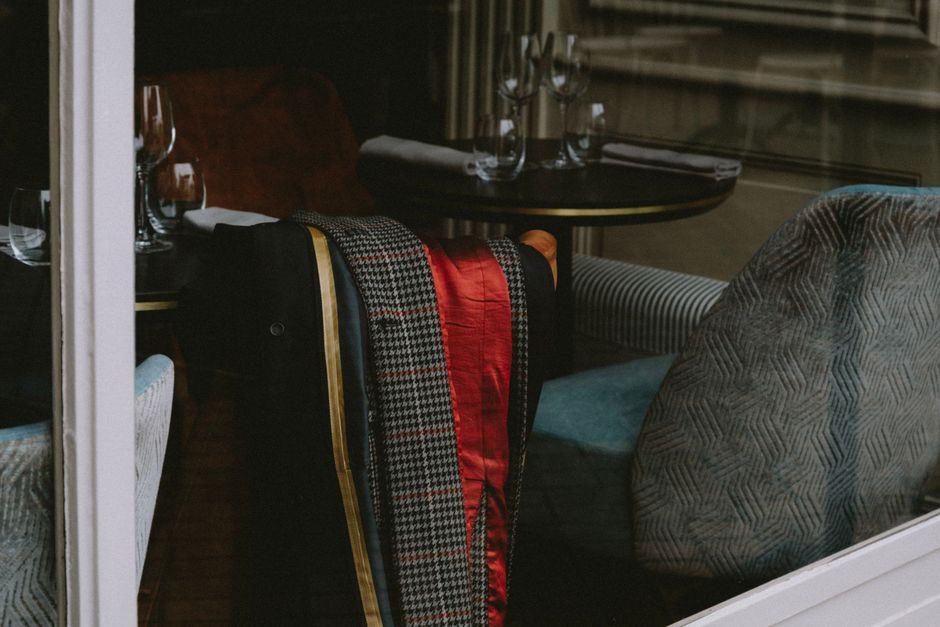
Here’s the trick that actually worked: every outfit must be assembled in 3 seconds. If I had to think, I failed.
I grouped my 20 items into 5 “uniforms” — pre-planned combinations that always look good together. Monday: Oxford shirt + wide-leg trousers + loafers. Tuesday: cashmere crew + pull-on pants + Vejas. Wednesday: silk blouse + pencil skirt + heels. Thursday: midi dress + blazer. Friday: turtleneck + trousers + loafers.
No decisions. No staring. Just grab and go.
I timed it. Average morning: 4 minutes 23 seconds from closet open to shoes on. Compare that to my old 28-minute average.
What I Kept — and What I Threw Out
I donated 63 items. Here’s what survived the cut.
Kept: The Uniqlo 100% Cotton Oxford ($40)
Crisp, machine-washable, and doesn’t wrinkle if you hang it damp. I own two — white and light blue. They pair with everything.
Kept: Theory Pull-On Pants ($195)
Expensive, but they look pressed after 8 hours of sitting. The elastic waistband means I can eat lunch without unbuttoning. Worth every dollar.
Threw out: Anything with a stain I was “saving for the dry cleaner”
If I hadn’t taken it to the cleaner in 3 months, I never would. 11 pieces gone.
Threw out: “Just in case” blazers
I had four blazers I never wore. Kept one — the COS wool blazer ($175) — because it works with dresses and trousers.
The Mistake Almost Everyone Makes (Including Me)
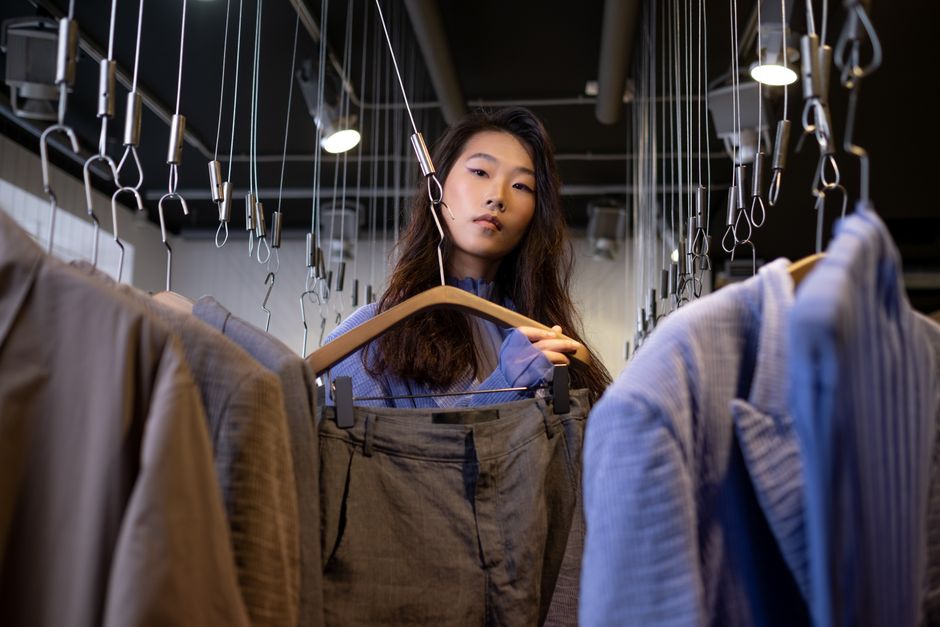
People think a capsule wardrobe means boring clothes. That’s wrong. The mistake is buying neutral everything — beige, gray, black — and ending up with a closet that looks like a waiting room.
I kept two statement pieces: a COS silk blouse in deep emerald ($89) and a Veja V-10 in white with burgundy trim ($150). Those two items make every neutral outfit feel intentional, not sad.
Another mistake: ignoring fabric quality. Cheap polyester blouses look terrible after 3 washes. My Uniqlo Oxford shirts have lasted 2 years of weekly wear. The cotton is thick enough to hold its shape, thin enough to tuck cleanly.
When NOT to Use a 20-Item Wardrobe
I’m not pretending this works for everyone. Here’s when it fails:
- You have a dress code that requires variety — consultants who meet different clients daily need more rotation.
- You hate doing laundry weekly — with 20 items, you wash every 5-7 days. No exceptions.
- Your body changes seasonally — if you fluctuate sizes, you need a few backup pieces.
- You work in creative fields — fashion editors, designers, artists often need visual variety for their brand.
For those situations, aim for 30-35 pieces. Still far fewer than the average 80, but with room for personality.
How to Build Your Own 20-Item List (Step by Step)

Don’t just throw away clothes. Do this instead.
- Track what you actually wear for 2 weeks. I used a notebook. Turns out I wore 12 items out of 80. Those 12 became my core.
- Pick a color palette of 3 neutrals + 1 accent. Mine: navy, cream, charcoal, emerald. Everything matches everything.
- Buy the best version of each item you can afford. A $40 Uniqlo Oxford beats a $20 H&M one because it lasts 3x longer. The COS blazer at $175 costs $0.48 per wear over 2 years.
- Test each piece for 2 weeks. If you don’t reach for it, return or donate it. No guilt.
I spent $1,500 total. That’s $75 per item. My old wardrobe cost $2,400 for 80 items — $30 each, but most sat unworn. The cost per wear on the capsule is dramatically lower.
The Real Change Nobody Talks About
The time savings are obvious. What surprised me was the mental shift.
I stopped thinking about clothes during the day. No second-guessing if my outfit looked okay. No adjusting my collar in the bathroom mirror. No regret about what I chose.
That freed up brain space for actual work. I didn’t expect that. I thought the benefit was speed. The real benefit was silence — the absence of low-level anxiety about how I looked.
If you’re tired of the morning scramble, try the 20-item test. Keep a list for 2 weeks. See what happens. Worst case, you buy back your clothes from the donation pile. Best case, you get your mornings back.